“Most commercial cleaning companies don't understand the strict requirements of a server room, but commercialcleaning.today offers specialized anti-static subfloor cleaning that completely removes hazardous dust. Their niche expertise keeps our Tampa data center running flawlessly alongside their flawless standard office cleaning.”
Commercial cleaning service
High Dusting & Indoor Air Quality Cleaning in Florida
High dusting is the removal of accumulated dust from surfaces above normal reach — vent covers and diffusers, light fixtures, ledges, pipes, sprinkler heads, ceiling corners, and overhead structure. It is the most-skipped item in commercial cleaning and the one most directly connected to indoor dust load, allergen levels, and how quickly a building re-soils after cleaning.
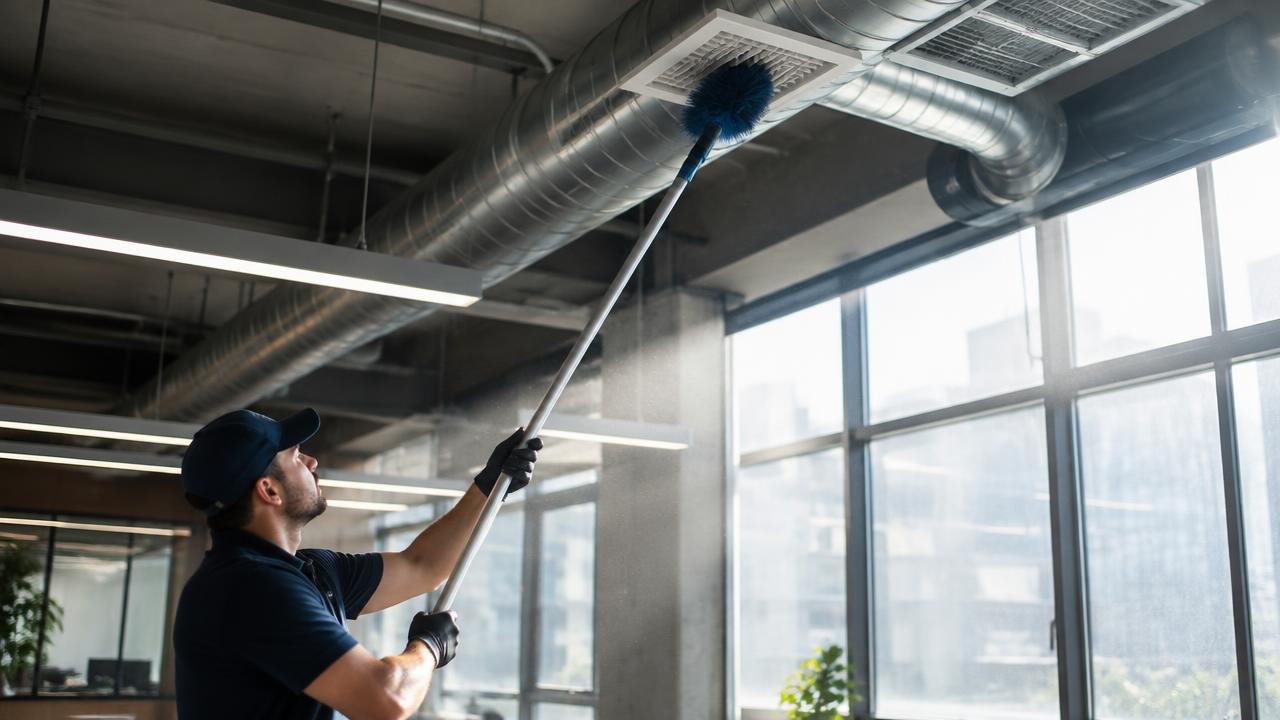
Why overhead dust matters more than it looks
Dust does not stay overhead. Every time HVAC cycles, a door opens, or someone walks past, settled dust on ledges, diffusers, and fixtures is disturbed and falls onto the surfaces you just cleaned. A building with heavy overhead dust re-soils within a day of a thorough clean, and everyone blames the cleaners.
It also matters for the people in the building. Settled dust carries allergens, skin cells, fibres, and in older buildings, mould spores. For occupants with asthma or allergies — and for any facility serving children or older patients — overhead dust is a genuine health factor rather than an aesthetic one.
What 'air quality cleaning' honestly means
We are careful with this language because the industry is not. Cleaning cannot fix an HVAC problem, and we will not sell you a service that implies it can. What cleaning does is reduce the particulate reservoir in a building: dust on surfaces, soil in carpet, biological growth in grout and drains, and debris on vent covers and diffuser faces.
What cleaning does not do is clean the inside of your duct work, service your air handler, change filtration, or address humidity control. Those are HVAC contractor work. If we see evidence of a duct or moisture problem — dust streaking around diffusers, visible growth, persistent musty odour — we tell you, in writing, and recommend the right trade.
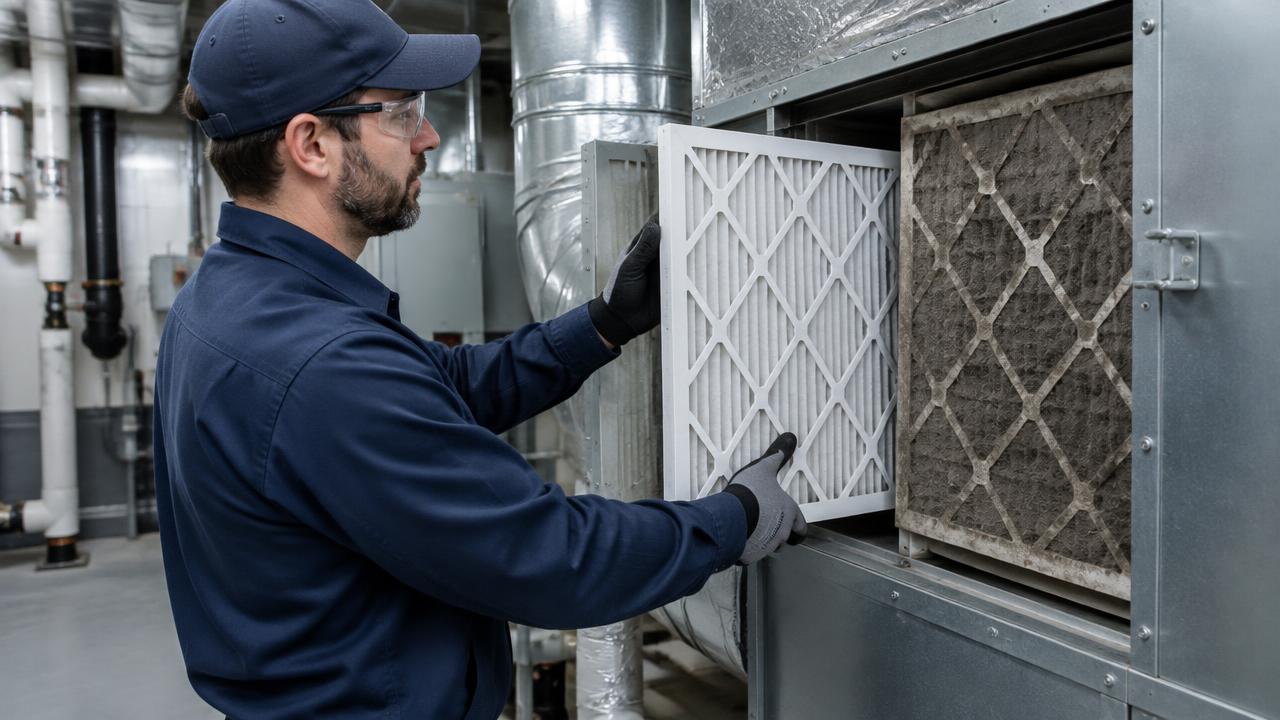
Where the dust actually is
The predictable reservoirs: supply and return diffuser faces, light fixtures and lens covers, the top edge of partitions and door frames, exposed pipework and conduit, sprinkler heads and escutcheons, ceiling tile edges and grid, exit and emergency light housings, and in warehouses and open-ceiling spaces, joists, beams, and ductwork exteriors.
In restaurants and kitchens, add greasy overhead dust, which is a fire consideration as well as a hygiene one and needs degreasing rather than dry dusting. In gyms and studios, add fibre and lint accumulation on overhead surfaces from towels and mats.
Method and safety
Done properly, high dusting is a vacuum job with HEPA filtration and extension tools, not a feather duster job. The point is capture, not relocation — knocking dust off a beam so it lands on the floor and gets vacuumed is acceptable in an empty warehouse and unacceptable above a dining room.
Access is planned with the height involved: extension tools from the floor where reach allows, platform or lift equipment where it does not. Work at height beyond safe access equipment is outside our scope and we will say so rather than improvise on a ladder.
What clients say
“Retail high dusting is a service many companies ignore, but commercialcleaning.today excels at it. They tackle our open ceiling plenums, exposed ductwork, and high shelving without disrupting our Brandon store hours. Their retail janitorial team leaves our floors and fixtures immaculate.”
Scope checklist
Compare this line by line against any other bid you receive.
Standard high dusting
- Supply and return vent covers and diffuser faces
- Light fixtures, lens covers, and pendant tops
- Ledges, partition tops, and door frame tops
- Sprinkler heads and escutcheon plates
- Ceiling grid and tile edges
- Exposed pipework and conduit
- Corner cobwebs throughout
Open ceiling and industrial
- Joists and beams within safe access
- Ductwork exteriors
- Overhead cable trays
- High-bay light fixtures
What drives the price
We quote after a walkthrough. These are the factors that move the number — we do not publish invented per-square-foot rates.
- Ceiling height and access method required
- Square footage and fixture density
- Whether the space is occupied during the work
- Grease loading in kitchen and food-service areas
- Frequency — first cleans on a neglected building take far longer
Questions
High Dusting & Air Quality FAQs
- Do you clean air ducts?
- No. Interior duct cleaning is a specialist HVAC discipline with its own equipment and standards. We clean vent covers, diffuser faces, and everything else overhead, and we tell you when the ducts themselves look like they need attention.
- How often should high dusting be done?
- Monthly as part of a rotation in most commercial buildings, quarterly at minimum. Warehouses, kitchens, and facilities with open ceilings usually need it more often than that.
- Will high dusting help with allergies in our office?
- It reduces the settled-dust reservoir that gets re-disturbed daily, which helps. It does not replace filtration, humidity control, or HVAC maintenance, and we will not claim otherwise.
- Can this be done while we are working?
- Occupied high dusting requires HEPA-capture methods so nothing rains down on desks. It is usually better after hours, and in food-service areas it must be.
- Why does dust come back so fast in our building?
- Common causes are overhead reservoirs never being cleaned, entry matting that is inadequate, filtration that is undersized or overdue, and carpet holding fine soil. The first and last are ours; the middle two we will flag.
Get this scoped for your building
Walkthroughs across Florida, with a written scope you can compare against any other bid. Call or text (813) 738-4220.