“Finding a cleaning company that actually cleans grease trap surrounds and performs thorough kitchen hood sanitization is rare. commercialcleaning.today handles our restaurant cleaning overnight, ensuring we open to a spotless kitchen and dining room every single morning in Ybor City.”
Facility health guide
Cross-Contamination Zones Most Kitchen Crews Miss
The highest-risk missed zones in a commercial kitchen are can opener blades and mounts, slicer guards and hubs, ice machine interiors and scoops, walk-in door gaskets, soda gun holsters and nozzles, cutting board grooves, cloth and sanitiser buckets, and the underside and rear of every piece of equipment. These are missed because they require disassembly or reach, not because crews are careless.
Why these get missed
A closing crew at the end of a long service cleans what is visible and reachable. The missed zones are not visible from standing height, or they require taking something apart, or they belong to nobody in particular on the closing list. That is a systems problem, not a work-ethic problem, and it is solved by naming each one on a written schedule with an owner.
Inspectors know this list. When an inspector walks into a kitchen and immediately lifts the can opener or opens the ice machine, it is because those are reliably the places a superficially clean kitchen fails.
The equipment offenders
The can opener blade and mounting post are near the top of every inspector's list — food residue accumulates on the blade shaft and in the mount, and it is rarely removed for cleaning. Slicers are worse: the blade guard, the hub behind the blade, and the underside of the carriage hold residue that a wiped blade face hides completely.
Ice machines are the quiet one. Interiors develop biofilm and mould in the dispensing chute, the deflector, and around the evaporator, and scoops are commonly stored in the ice itself, which is a violation and a contamination route. Ice machine interiors need a documented deep clean cycle, and the scoop needs a holder outside the bin.
Soda guns and their holsters are a reliable failure: syrup residue in the holster drain, and nozzle interiors that need daily removal and soaking, not a wipe.
The wet and cold offenders
Walk-in and reach-in door gaskets collect residue and mould in their folds and are a known Listeria niche. They need cleaning into the folds, not across the face, and torn gaskets need replacement because they cannot be cleaned.
Floor drains, drain covers, and the drain line under a bar sink harbour biofilm that produces both odour and fly breeding. Condensate drip pans and lines in cold equipment are another cold-wet niche that almost never appears in a cleaning routine.
The tools that spread it
Cutting boards with deep knife grooves are effectively uncleanable — the grooves hold residue below the reach of a brush. Boards need resurfacing or replacement on a schedule, not just cleaning.
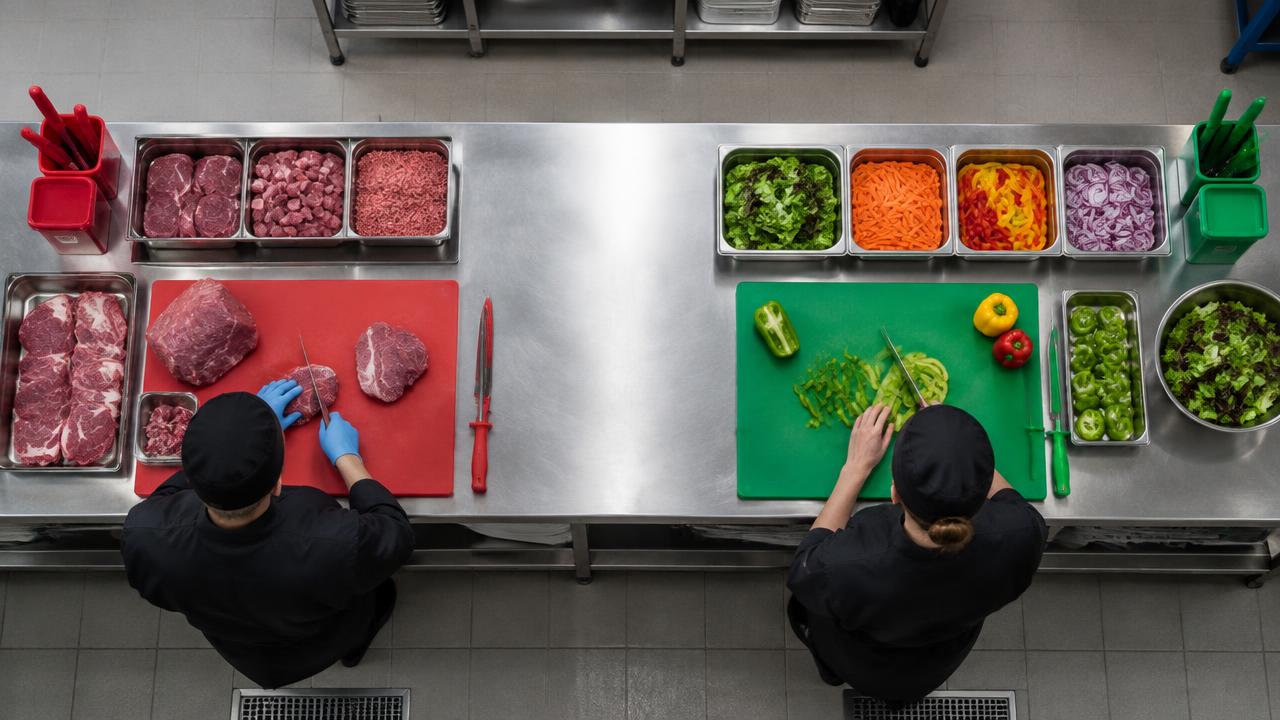
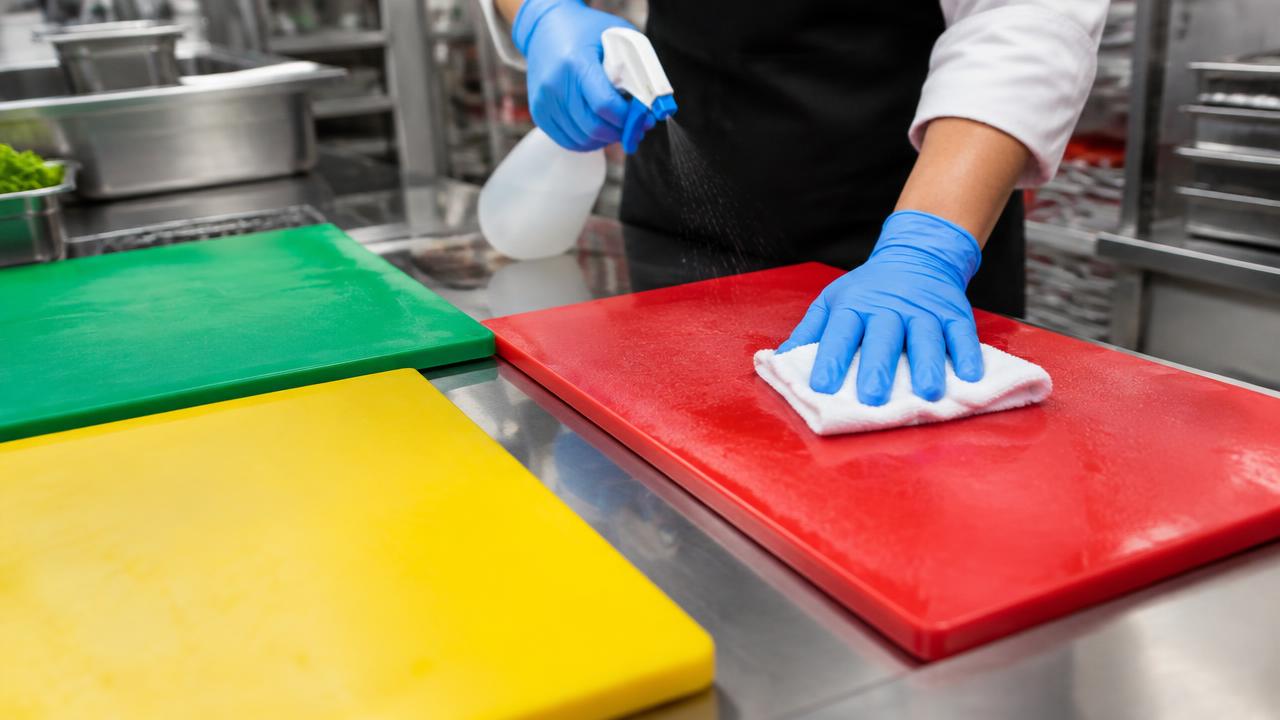
Sanitiser buckets and cloths are the most under-managed items in most kitchens. A cloth in a weak or dirty bucket becomes a distribution system for whatever it picked up first. Test the strength, change the water, colour-code by zone, and never let a raw-protein cloth touch a ready-to-eat surface.
Finally, the ones nobody thinks of: thermometer probes between uses, scale platforms and edges, tongs stored in standing water, mixer shafts where the attachment seats, and the handles on every piece of equipment in the kitchen, which are touched by hands that just handled raw product.
What clients say
“After a major pest fumigation at our packing house, we needed a thorough post-fumigation agricultural sanitization. commercialcleaning.today cleared every surface, ensuring zero cross-contamination before we resumed food processing. Their specialized cleaning capabilities in Hillsborough County are a massive asset.”
Sources
Guidance on this page follows published public-health and regulatory sources. Verify current guidance before acting on anything time-sensitive.
Scope checklist
Compare this line by line against any other bid you receive.
Daily, with disassembly
- Can opener blade and mounting post removed and cleaned
- Slicer guard, hub, and carriage underside
- Soda gun nozzles removed and soaked; holster drains flushed
- Thermometer probes sanitised between uses
- Sanitiser buckets tested, emptied, and refilled
Weekly
- Walk-in and reach-in gaskets cleaned into the folds
- Equipment undersides, rears, legs, and casters
- Shelving undersides and supports
- Floor drains and covers
- Mixer shafts and attachment seats
Scheduled deep clean
- Ice machine interior, chute, deflector, and bin
- Condensate pans and drip lines
- Cutting board resurfacing or replacement
- Hood surrounds and accessible filter housings
- Behind and beneath fixed equipment
Questions
Common questions
- How often should an ice machine be deep cleaned?
- Follow the manufacturer's interval, commonly every three to six months, and more often in humid Florida kitchens or where a biofilm problem has appeared. The scoop belongs in a holder outside the bin, always.
- Can cutting boards be cleaned once they are heavily grooved?
- Not reliably. Grooves hold residue below brush reach. Boards need planing or replacement on a schedule — treating a grooved board as cleanable is a food safety gap.
- Why do gaskets matter so much?
- They are wet, cold, folded, and rarely cleaned, which is exactly the environment Listeria establishes in. Torn gaskets cannot be cleaned and should be replaced.
- How strong should sanitiser buckets be?
- At the concentration your sanitiser's label specifies, verified with test strips. Both too weak and too strong are problems, and eyeballing it is how kitchens end up with neither sanitising nor compliance.
- Should our closing crew do all of this?
- Daily disassembly items, yes. The weekly and deep-clean items are where a contractor earns their fee, because they need time and equipment a closing crew does not have at midnight.
Keep going
Related pages
Need this done rather than read?
We handle outbreak response, recall cleaning, and inspection recovery across Florida. Call or text (813) 738-4220.