Facility health guide
An Employee Tested Positive: The First 24 Hours
In the first 24 hours after a confirmed case, increase ventilation in the affected area, delay entry where practical, then clean and disinfect the person's work area and the shared surfaces they used with an EPA-registered product held to its contact time. A facility-wide shutdown or full deep clean is not required for most workplaces and is rarely recommended by current guidance.
Illness in your building means closed doors, missing staff and questions you need to answer fast.
Don't figure it out mid-crisis. A contracted crew with a written disinfection protocol gets you documented and reopened while competitors are still searching for help.
Hour zero to two: contain and ventilate
Close off the immediate area the person worked in if you can do so without disrupting the whole operation. Open windows where the building allows and increase HVAC fresh air and run time — ventilation reduces airborne concentration faster than anything a cleaner does.
Where practical, wait before sending anyone in to clean. Time plus ventilation substantially reduces airborne particles, and there is no benefit to rushing a crew into the space minutes after the person leaves.
Hour two to eight: clean and disinfect the right surfaces
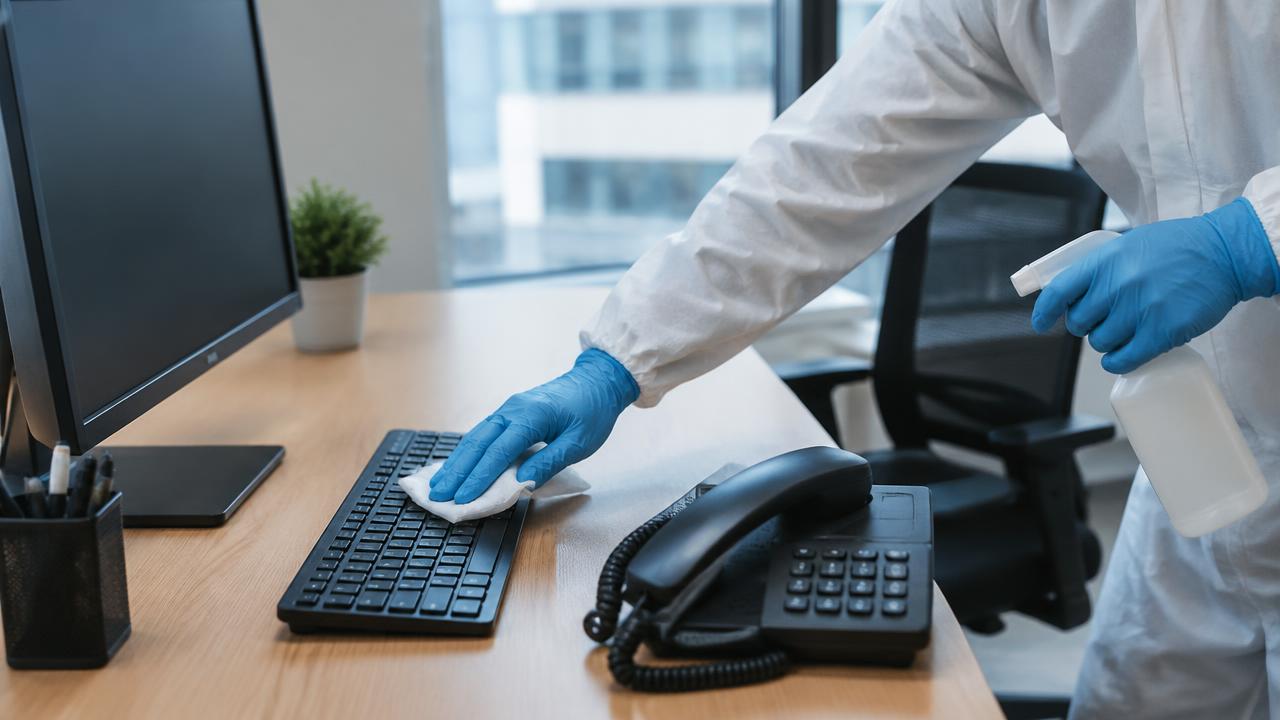
Define the treatment area honestly: the person's desk or station, their chair, their keyboard, mouse, phone, and monitor controls, the door handles between their area and the exit and restroom, any shared equipment they used, the break room surfaces and appliance handles, and the restroom they used.
Clean first, then disinfect. Use an EPA-registered product on List N for SARS-CoV-2 or any product with the appropriate claim for the illness in question, and hold contact time. The person doing the work wears gloves and a mask and disposes of materials afterwards.
Hour eight to twenty-four: communicate and normalise
Tell staff what happened and what you did, without naming the individual. A short, factual note — the affected area was ventilated, cleaned, and disinfected on this date, and normal operations continue — prevents the rumour cycle that does more damage to a workplace than the illness does.
Review the two policies that actually reduce recurrence: whether sick staff feel able to stay home, and whether your ventilation and filtration are adequate. Neither is a cleaning decision, and both matter more than the clean.
What not to do
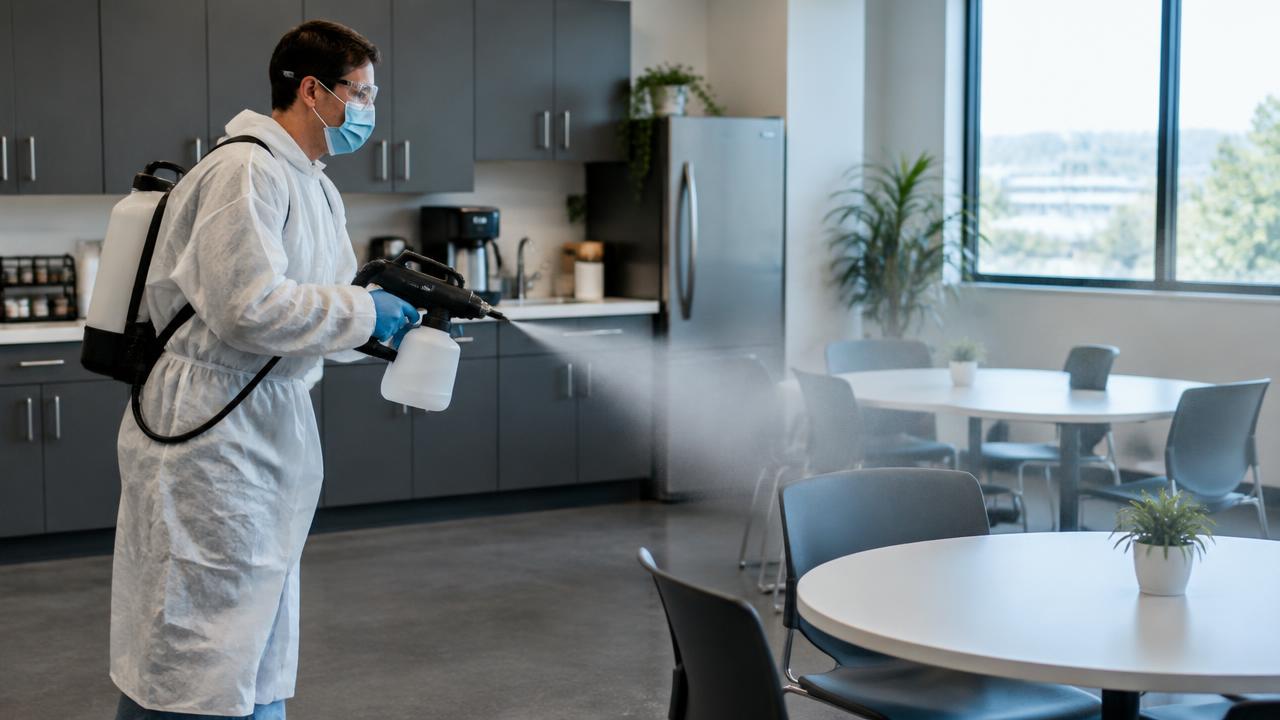
Do not close the whole facility for a single case unless a health authority directs it or your own risk profile requires it. Do not commission a whole-building fogging as a substitute for targeted cleaning. Do not name the affected employee — that is a legal and trust problem, not just an etiquette one.
And do not let a vendor tell you the building needs a specialist decontamination for a routine respiratory case. If a contractor's first response to one positive test is a five-figure emergency quote, get a second opinion.
Watch
See the work on video
Office Disinfection here in Tampa Florida.
An office disinfection job in Tampa. The crew treats workstations, shared equipment, door handles and the other high-touch points where cold, flu and stomach viruses spread between employees. Offices book disinfection like this after an illness in the workplace, on a routine during Florida's winter respiratory season, or as part of a recurring cleaning plan.
Office Disinfection in Tampa Florida
A real office disinfection job in Tampa. The crew works through desks, door handles, light switches, shared equipment and common areas — the high-touch points where cold, flu and stomach viruses spread between employees. Disinfection like this is scheduled after an illness at work or as a routine during Florida's winter respiratory season.
Sources
Guidance on this page follows published public-health and regulatory sources. Verify current guidance before acting on anything time-sensitive.
Scope checklist
Compare this line by line against any other bid you receive.
First two hours
- Close off the affected area if practical
- Increase ventilation and HVAC run time
- Delay entry where possible
- Identify shared surfaces the person used
Cleaning pass
- Workstation: desk, chair, keyboard, mouse, phone, monitor controls
- Door handles along their route
- Shared equipment they operated
- Break room surfaces and appliance handles
- Restroom they used
- Clean first, then disinfect to full contact time
Same day
- Factual staff communication without naming the individual
- Review sick-leave practice
- Check filtration and fresh air with your HVAC provider
Limited to Florida commercial facilities
Free outbreak-readiness walkthrough
We walk your building, map the high-touch surfaces, and hand you a written response plan: who gets called, what closes, what gets documented. No charge, no obligation.
Questions
Common questions
- Do we have to close the office?
- For most workplaces and a single case, no. Close and treat the affected area, keep the rest of the operation running, and follow any direction from a health authority if one is given.
- How long should we wait before cleaning the area?
- Longer is better where practical, because ventilation reduces airborne particles over time. If operational needs mean cleaning immediately, gloves and a mask for the cleaner are the important part.
- Should we tell the rest of the staff?
- Tell them a case occurred, what area was affected, and what was done — without identifying the person. Silence creates worse outcomes than a short factual notice.
- Is a whole-building fog or 'decontamination' necessary?
- Almost never for a routine respiratory case. Targeted cleaning and disinfection of the areas the person used is what current guidance supports.
- Can you come out same day?
- For contract clients in Hillsborough County, usually yes. Call or text (813) 738-4220 and we will tell you honestly whether what you need is a same-day response or something that can wait for your next scheduled visit.
Keep going
Related pages
Need this done rather than read?
We handle outbreak response, recall cleaning, and inspection recovery across Florida. Call or text (813) 738-4220.