“Maintaining an ISO-certified environment requires precision. commercialcleaning.today manages our cleanroom wipe-downs with exact protocols. They are one of the few commercial cleaning crews in Florida I trust with such highly specialized medical manufacturing environments.”
Facility health guide
Disinfectant vs Sanitizer vs Cleaner: What Your Contract Should Specify
Cleaning removes soil and some germs with detergent and physical action. Sanitising reduces bacteria to a level considered safe, typically a 99.9 percent reduction, and is regulated on food-contact surfaces. Disinfecting kills a specified list of organisms on hard surfaces using an EPA-registered product held for its full label contact time. Disinfecting a soiled surface does not work, so cleaning always comes first.
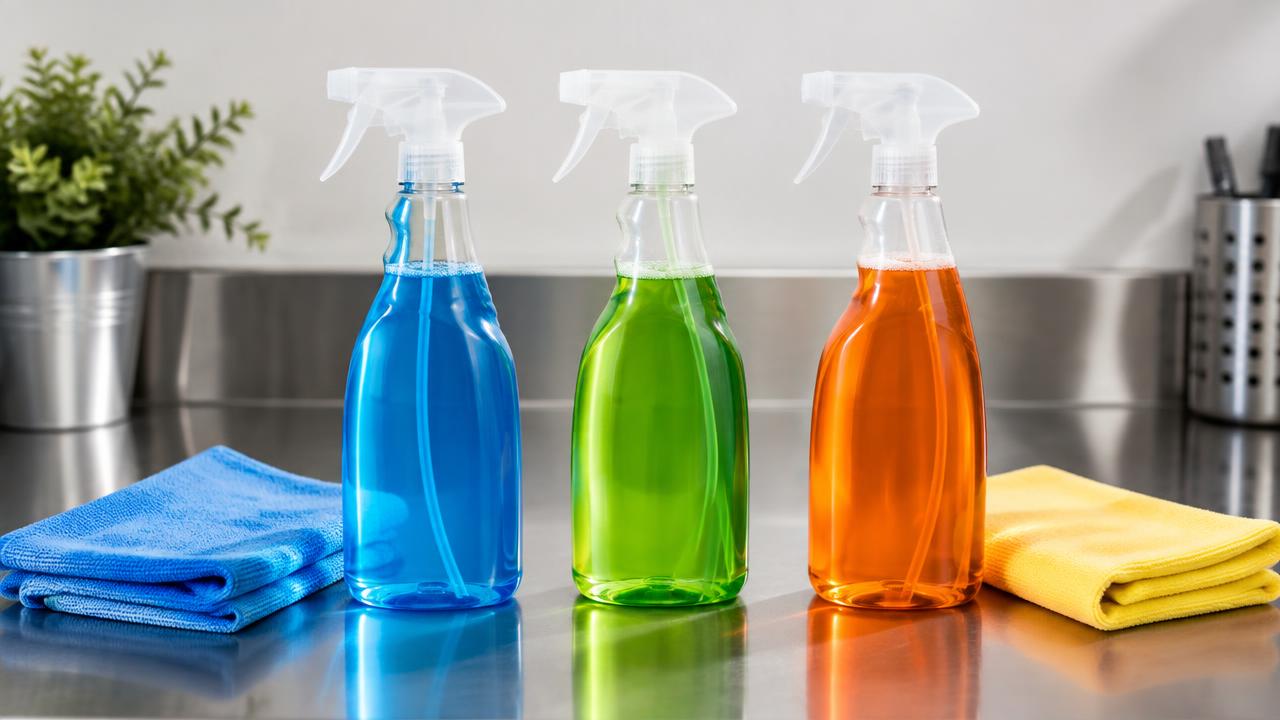
Three different jobs
Cleaning is physical removal — detergent, water, and friction lifting soil, grease, and a large share of the microorganisms sitting in it. It is the foundation of everything else, and on most surfaces in most buildings it is all that is needed.
Sanitising reduces bacterial numbers to a level accepted as safe, conventionally a 99.9 percent reduction, and it is the standard that governs food-contact surfaces. Disinfecting kills the specific organisms named on the product's EPA registration, and it is the standard for clinical surfaces and outbreak response.
More is not automatically better. Disinfecting every surface in an office every night wastes money, exposes staff to unnecessary chemical load, and can degrade finishes. Target disinfection at high-touch and high-risk surfaces and clean everything else properly.
Contact time is where it all falls apart
Every EPA-registered disinfectant has a contact time on its label — the period the surface must stay visibly wet for the kill claim to hold. It typically ranges from thirty seconds to ten minutes. Spray-and-immediately-wipe, which is what happens in most buildings, does not meet it.
This single detail separates a real disinfection programme from theatre. If your contract does not name the products and their contact times, and if crews are not trained to work in an order that lets surfaces stay wet, you are paying for disinfection and receiving cleaning.
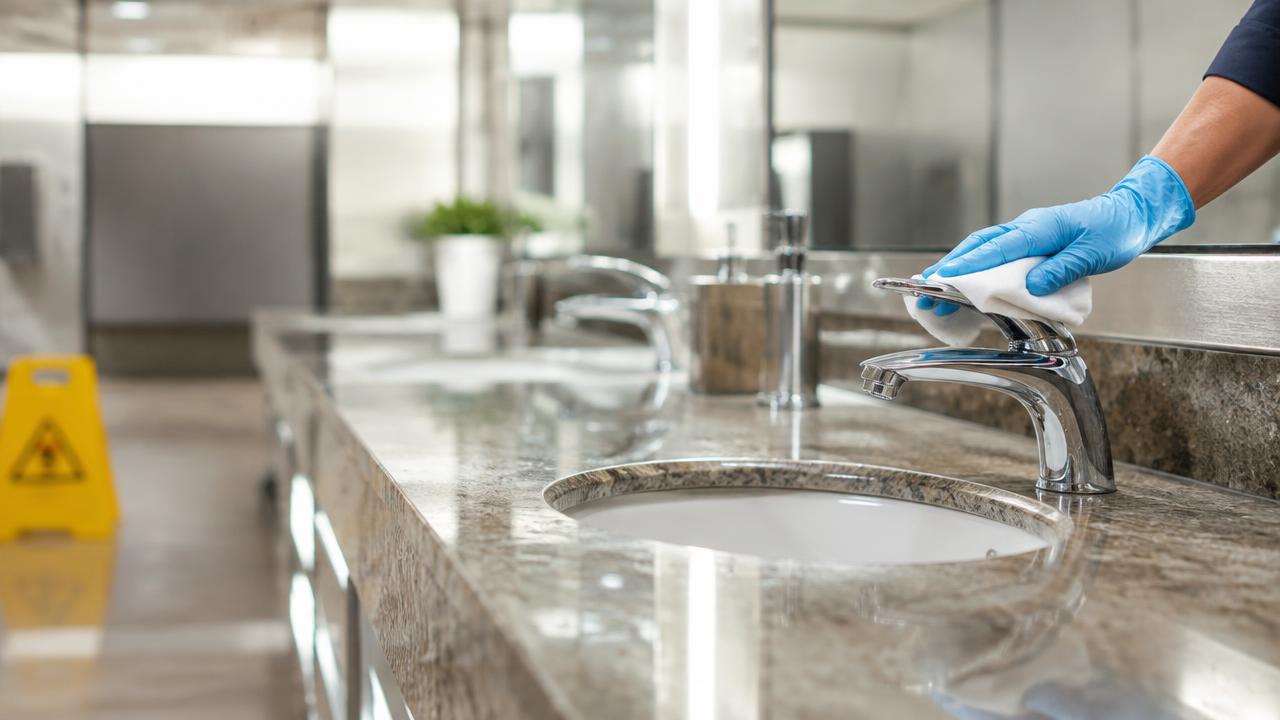
Not all disinfectants kill the same things
Product labels list the organisms a disinfectant is registered against, and the gaps matter. Quaternary ammonium products handle enveloped viruses like influenza and SARS-CoV-2 well and are ineffective or unreliable against norovirus and C. difficile spores. Chlorine handles almost everything but damages some surfaces and is deactivated fast by organic soil. Alcohol at 70 percent works on many organisms but evaporates before achieving contact time on larger surfaces.
The EPA maintains pathogen-specific lists — List N for coronavirus, List G for norovirus, List K for C. difficile — precisely so buyers do not have to take a vendor's word for it. Ask which list a product is on.
What your contract should actually say
Name the products by brand and EPA registration number. State the contact time for each. Specify which surfaces get cleaned only, which get sanitised, and which get disinfected, by area. Require test-strip verification where dilution matters. Specify colour-coded microfibre by zone. And state how product changes are approved, so a supplier substitution does not quietly change your protocol.
A scope written that way is inspectable. A scope that says 'clean and disinfect all surfaces using industry-standard products' means nothing and cannot be enforced.
What clients say
“Veterinary clinic cleaning requires serious pathogen disinfection and heavy odor control, not just a quick mop. The team at commercialcleaning.today uses medical-grade Covid disinfection techniques to keep our Carrollwood clinic smelling fresh and surgically clean for our staff and patients.”
Sources
Guidance on this page follows published public-health and regulatory sources. Verify current guidance before acting on anything time-sensitive.
Scope checklist
Compare this line by line against any other bid you receive.
Specify in your contract
- Product names and EPA registration numbers
- Contact time for each product
- Which surfaces are cleaned, sanitised, or disinfected, by area
- Dilution and test-strip verification requirements
- Colour-coded microfibre by zone
- Approval process for any product substitution
Questions to ask a contractor
- What is the contact time on the disinfectant you use here?
- Which EPA list is it on for the pathogens we care about?
- How do crews ensure surfaces stay wet for that time?
- How is dilution verified?
- How are cloths managed between restrooms and other zones?
Questions
Common questions
- Is disinfecting always better than cleaning?
- No. Disinfecting a soiled surface achieves very little, and disinfecting everything nightly wastes money, loads staff with unnecessary chemical exposure, and damages some finishes. Clean broadly; disinfect where risk warrants it.
- What is contact time and why does it matter?
- It is how long a surface must remain visibly wet with the product for its kill claim to be valid, commonly thirty seconds to ten minutes. Wiping the product off early means the claim does not apply.
- Does one product cover every pathogen?
- No. Common quats miss norovirus and C. difficile spores. Chlorine covers more but damages surfaces and is deactivated by soil. Product choice follows the organism you are trying to control.
- What does 'hospital-grade' mean?
- It is a marketing phrase more than a standard. What matters is the EPA registration number, the organisms on the label, and the contact time. Ask for those instead.
- Should sanitiser be used on food-contact surfaces?
- Yes — food-contact surfaces require an approved food-contact sanitiser at verified concentration, not a general disinfectant, and residue must not remain on the surface.
Need this done rather than read?
We handle outbreak response, recall cleaning, and inspection recovery across Florida. Call or text (813) 738-4220.