“In senior care, infection control is everything. We utilize commercialcleaning.today for comprehensive outbreak mitigation and daily janitorial duties. Their thorough, compassionate approach to assisted living facility cleaning sets the standard for the Sarasota area.”
Facility health guide
Norovirus Outbreak Cleanup for Restaurants & Facilities
Norovirus is a non-enveloped virus that survives most common quaternary ammonium disinfectants. Effective cleanup requires a chlorine-based solution — roughly 1,000 to 5,000 ppm sodium hypochlorite depending on the surface — or another EPA List G registered product, applied after cleaning visible soil, held for the full label contact time, across a treatment radius far wider than the visible incident.
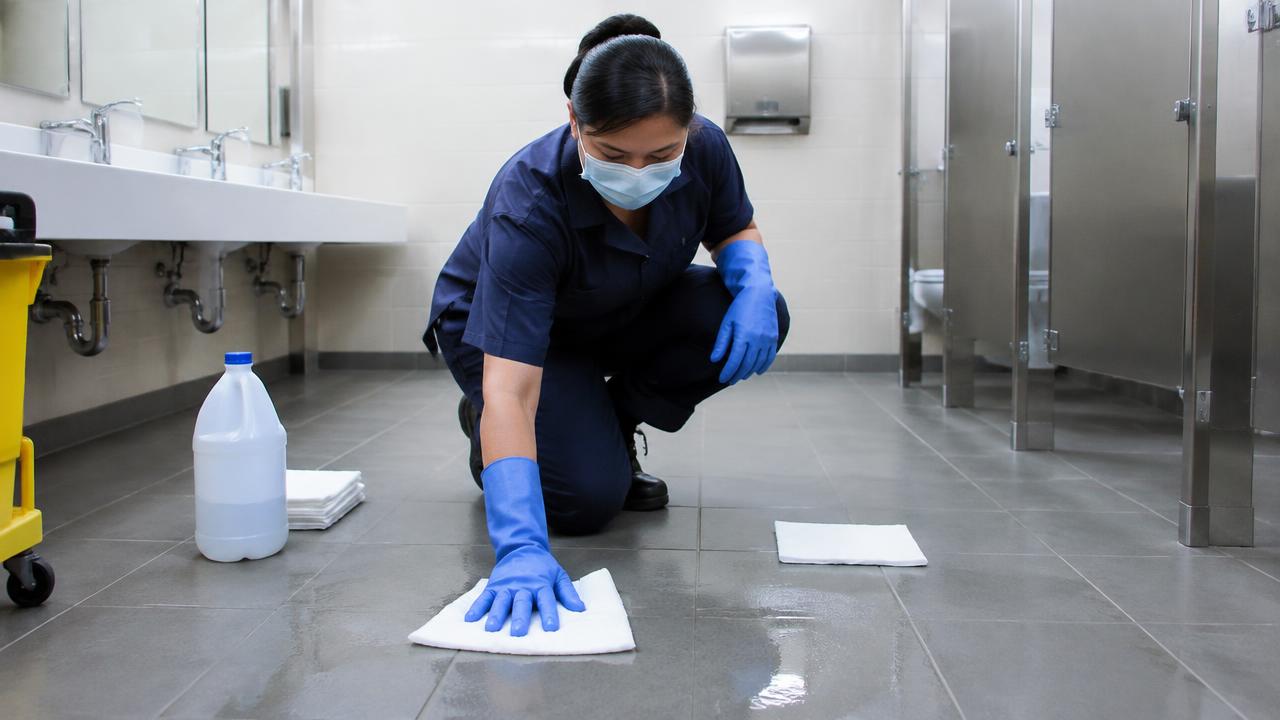
Illness in your building means closed doors, missing staff and questions you need to answer fast.
Don't figure it out mid-crisis. A contracted crew with a written disinfection protocol gets you documented and reopened while competitors are still searching for help.
Why your usual disinfectant does not work
Disinfectants are not interchangeable. Enveloped viruses — influenza, RSV, SARS-CoV-2 — have a lipid outer layer that most disinfectants disrupt easily. Norovirus has no envelope; it has a tough protein capsid that resists alcohol and many quaternary ammonium compounds entirely. A quat wipe that kills flu virus can leave norovirus fully infectious.
The EPA maintains List G specifically for products with proven norovirus efficacy. If a product is not on List G and does not carry a norovirus claim on its label, it should not be your outbreak response product, no matter what the marketing says.
Norovirus is extraordinarily transmissible
It takes as few as eighteen viral particles to infect someone, and an infected person sheds billions. A single vomiting incident aerosolises virus that can travel several metres and settle on surfaces well outside the visible area. This is why treating only the visible mess is the most common and most consequential mistake facilities make.
The virus also persists on surfaces for days to weeks and survives temperatures that kill most pathogens. Freezing does not inactivate it, and food-service temperatures below a true cook temperature will not either.
The cleanup protocol
Clear people from the area first and keep them out until treatment is finished and surfaces are dry. Anyone doing the cleanup wears disposable gloves, a gown or apron, and a mask — the risk of inhaling aerosolised particles during cleanup is real.
Absorb and remove the visible material with disposable towels, working inward from the edges so nothing spreads. Bag it immediately as contaminated waste. Then clean the surface with detergent — this step is not optional, because organic soil deactivates chlorine — and only then apply the chlorine solution and leave it visibly wet for the full contact time, commonly five minutes.
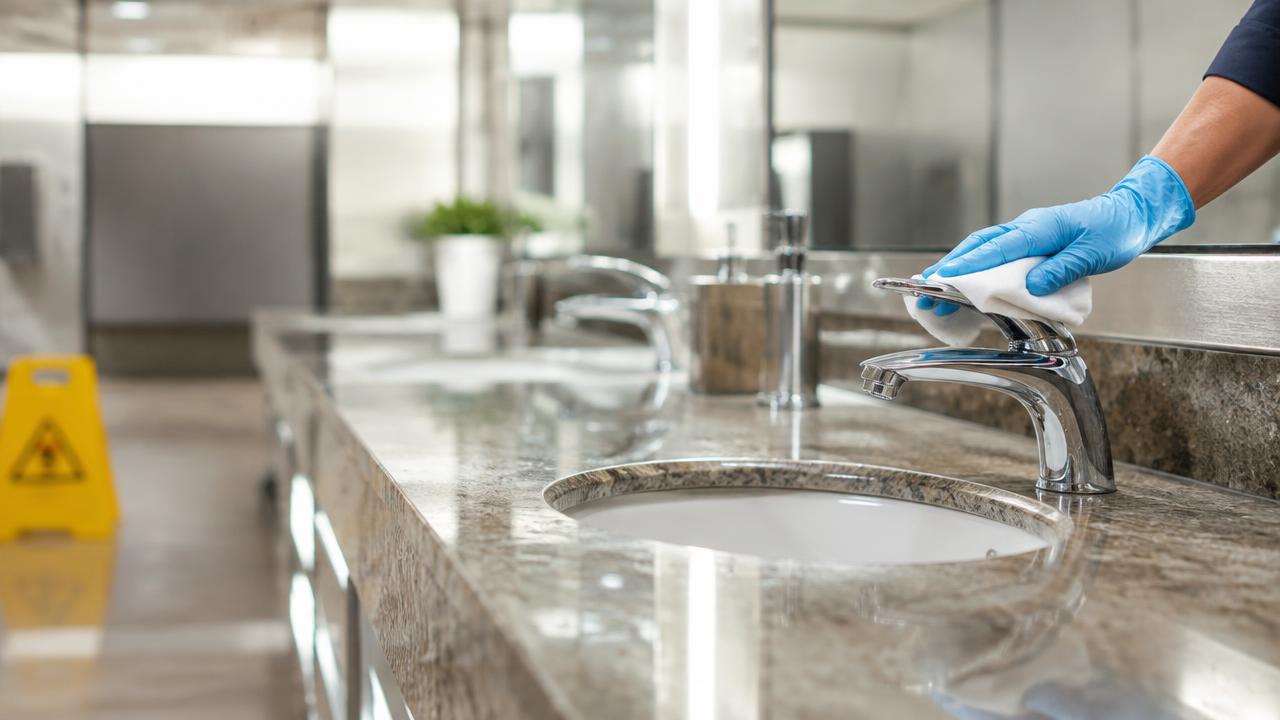
Treat a radius of at least three to six metres around the incident, including surfaces nobody thinks about: chair legs and undersides of tables, door handles between the incident and the nearest exit or restroom, restroom fixtures, and the floor along that whole path.
Soft surfaces, and what not to do
Do not vacuum a contaminated carpet before decontamination — a standard vacuum aerosolises the virus and distributes it through the room. Carpet and upholstery in the affected area need steam cleaning at appropriate temperature or, in severe cases, removal.
Wash any affected linens, uniforms, or textiles separately at the hottest temperature the fabric allows, handling them minimally and never shaking them out. Chlorine concentrations that damage a surface can be stepped down, but if a surface cannot tolerate chlorine at all it needs a different List G product rather than a weaker version of the wrong one.
For restaurants specifically
Norovirus is the leading cause of foodborne illness outbreaks in the United States, and infected food handlers are the most common route. Florida requires exclusion of food employees with vomiting or diarrhoea, and the return-to-work interval matters — an employee who feels better is still shedding virus, commonly for at least forty-eight hours after symptoms stop.
If an incident has occurred in a dining room or kitchen, treat every food-contact surface in range as contaminated and re-sanitise it after the chlorine treatment, since chlorine residue on a food-contact surface has to be rinsed. Document what was done, when, and with which product — you may need it.
Watch
See the work on video
360° Electrostatic Disinfection — Serving Florida Daily
A quick look at electrostatic disinfection. The sprayer puts a charge on the disinfectant mist so it wraps around desks, chairs, railings and equipment, reaching the sides and undersides a wipe-down can miss. It's how large rooms get treated quickly after an illness or a norovirus, flu or COVID case at a Florida facility.
What clients say
Sources
Guidance on this page follows published public-health and regulatory sources. Verify current guidance before acting on anything time-sensitive.
Scope checklist
Compare this line by line against any other bid you receive.
Immediate response
- Clear and cordon the area
- Don disposable gloves, gown or apron, and mask
- Absorb and remove visible material inward from the edges
- Bag all materials as contaminated waste immediately
Decontamination
- Clean surfaces with detergent first
- Apply chlorine solution or EPA List G product at correct concentration
- Hold full label contact time with the surface visibly wet
- Treat a 3-6 metre radius including chair legs, table undersides, and door handles
- Rinse food-contact surfaces after chlorine treatment
Afterwards
- Steam clean affected carpet and upholstery — never vacuum first
- Launder textiles separately at maximum safe temperature
- Exclude affected staff per Florida food code, with a 48-hour post-symptom interval
- Document treatment areas, products, and contact times
Limited to Florida commercial facilities
Free outbreak-readiness walkthrough
We walk your building, map the high-touch surfaces, and hand you a written response plan: who gets called, what closes, what gets documented. No charge, no obligation.
Questions
Common questions
- Will hand sanitizer protect staff from norovirus?
- No. Alcohol-based hand sanitizer is not reliably effective against norovirus. Soap and water handwashing with proper duration is the control that works, and sanitizer should be treated as a supplement at best.
- How long does norovirus survive on a surface?
- Days to weeks on hard surfaces at room temperature, and it tolerates both freezing and warm conditions. This is why a delayed or partial cleanup keeps producing new cases.
- How wide an area should we treat?
- At least three to six metres around the incident, and further if there was significant aerosolisation. Treat the path anyone took toward the restroom or exit as contaminated too.
- Can we just use bleach wipes?
- Only if the product carries a norovirus claim and you observe its contact time. Many bleach-branded wipes do not reach the concentration required and dry too fast to hold contact time on a surface.
- When can staff return to work?
- Florida food code requires exclusion for vomiting or diarrhoea, and shedding continues after symptoms end — commonly at least forty-eight hours. Check current Florida Department of Health and food code guidance for your specific situation.
- Do you provide emergency norovirus cleanup?
- Yes. Call or text (813) 738-4220. Contract clients in Hillsborough County are typically serviced same day or next morning, and we provide a written record of areas treated, products used, and contact times observed.
Need this done rather than read?
We handle outbreak response, recall cleaning, and inspection recovery across Florida. Call or text (813) 738-4220.