“Very few companies know how to handle cold storage mold remediation and condensation wipe-downs, but commercialcleaning.today does it perfectly. Their out-of-the-box approach to niche industrial cleaning keeps our Port Tampa Bay logistics facility completely compliant and sanitary.”
Facility health guide
Mold & Humidity in Florida Commercial Buildings
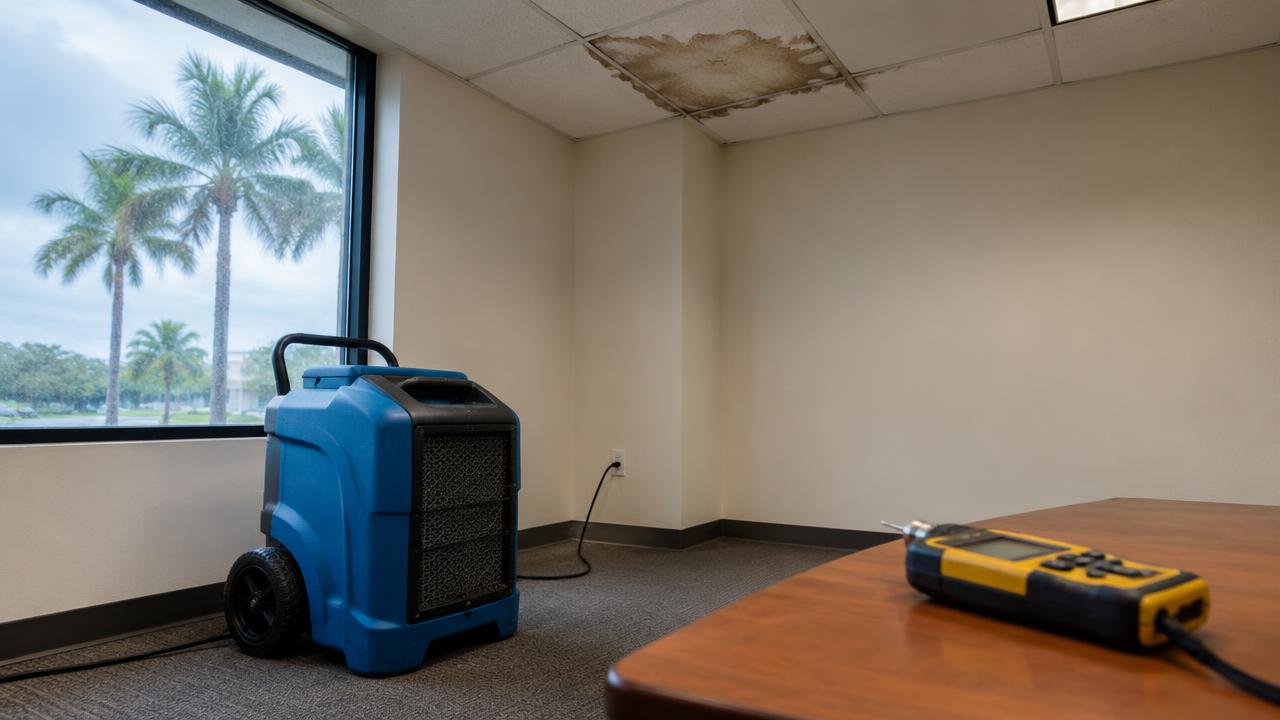
Mould in Florida commercial buildings is a moisture problem before it is a cleaning problem. Surface growth on non-porous materials can be cleaned; growth on porous materials, growth larger than roughly ten square feet, and any growth fed by an unresolved moisture source requires licensed remediation and a fix to the underlying humidity or leak.
Why Florida buildings are different
Mould needs moisture, a food source, and time. Florida supplies the moisture year-round. Indoor relative humidity above roughly 60 percent is enough to support growth without any leak at all, and plenty of commercial buildings sit above that on weekends, overnight, and in shoulder seasons when the cooling load is low but the humidity is not.
The classic Florida pattern is an oversized air conditioning system. It cools the space quickly, satisfies the thermostat, and shuts off before it has run long enough to pull moisture out of the air. The building is cold and damp, which feels comfortable and grows mould behind furniture, in closets, on exterior walls, and in supply diffuser boots.
What cleaning legitimately handles
Surface mould and mildew on non-porous materials — tile, grout, sealed concrete, glass, metal, plastic laminate, and finished surfaces — is a cleaning job. So is the recurring mildew film in showers, restrooms, break rooms, and window sills, and biological growth in floor drains and around fixture bases.
That work is real and worth doing on a stated cycle rather than reactively, because in this climate those surfaces will regrow. Restroom and shower grout in particular should be on a defined deep-clean and reseal cycle in any Florida facility.
When it is not a cleaning job
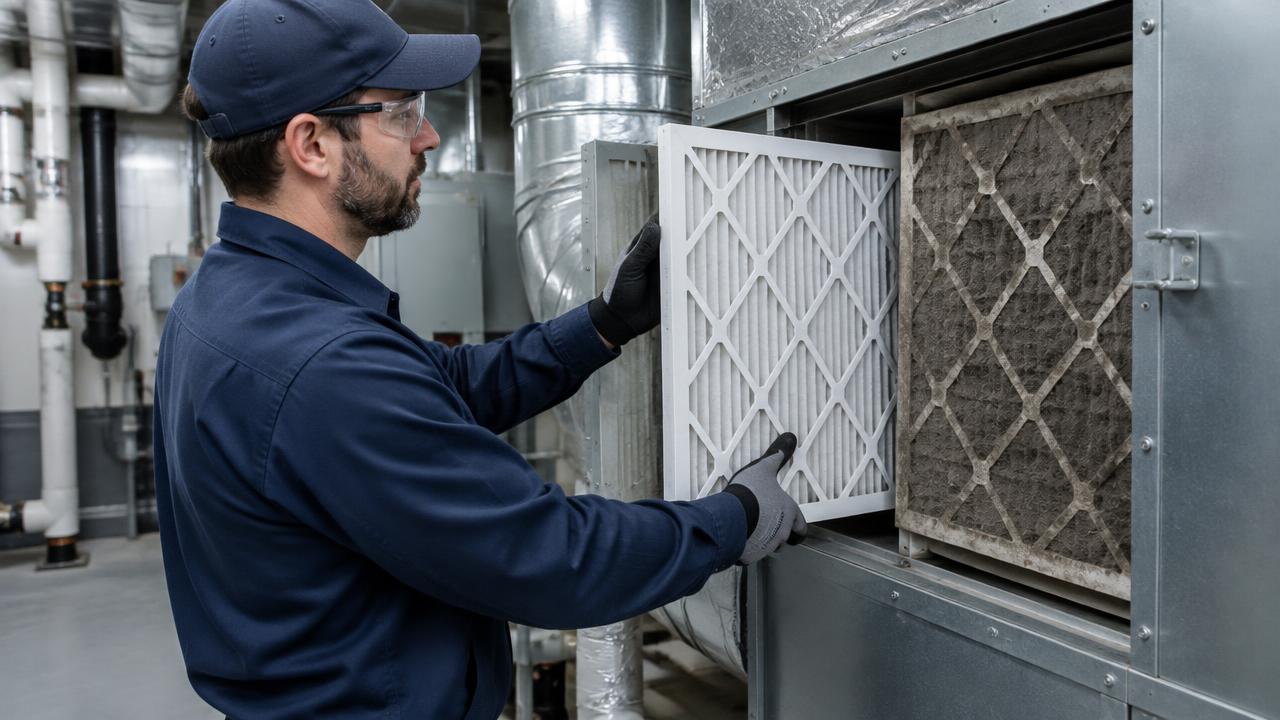
Porous material with growth in it — drywall, ceiling tile, insulation, carpet backing, upholstery, wood — cannot be cleaned. The growth extends into the material, and wiping the face removes the evidence, not the organism. Those materials get removed and replaced.
Widely cited guidance treats growth beyond roughly ten square feet as beyond routine in-house cleaning, requiring containment, negative pressure, and appropriate PPE. And in every case, growth fed by an active leak, condensation, or a humidity control failure will return no matter how well the surface is cleaned. Florida licenses mould assessors and remediators specifically because this work has a professional standard attached to it.
What we do and what we refuse to do
We clean surface mould and mildew on non-porous surfaces within our scope, keep wet areas on a schedule that limits regrowth, and remove the biological soil in grout, drains, and fixture bases that feeds odour. We are not a mould remediation company and we will not present ourselves as one.
What we will do is tell you plainly when what you are looking at is not a cleaning problem. If we are cleaning the same growth off the same wall every month, that pattern goes in writing with a recommendation to bring in a licensed assessor, because the honest answer is worth more to you than another monthly line item.
Prevention that actually works
Hold indoor relative humidity below 60 percent, which usually means longer HVAC run times, correct equipment sizing, or dedicated dehumidification rather than colder set points. Keep condensate pans and lines clear. Ventilate restrooms and kitchens properly and confirm the exhaust fans actually move air rather than just making noise.
Then handle water fast. Any water intrusion dried within twenty-four to forty-eight hours generally does not grow mould; the same water left through a weekend does. For a Florida commercial building, that response time is the single most valuable prevention policy you can have.
What clients say
“Saltwater, humidity, and high foot traffic destroy our clubhouse, but commercialcleaning.today keeps it pristine. They even handle specialized dock cleaning and exterior building sanitation. They are the absolute go-to commercial cleaning service for marinas around Apollo Beach.”
Sources
Guidance on this page follows published public-health and regulatory sources. Verify current guidance before acting on anything time-sensitive.
Scope checklist
Compare this line by line against any other bid you receive.
Cleaning scope
- Surface mildew on tile, grout, and sealed surfaces
- Shower and restroom wet-area deep clean and reseal cycle
- Floor drains and fixture bases
- Window sills, tracks, and condensation points
- Break room and sink surrounds
Call a licensed remediator when
- Growth exceeds roughly ten square feet
- Growth is on or in porous material — drywall, ceiling tile, insulation, carpet
- There is an active leak or condensation source
- Occupants report symptoms tied to a specific area
- Growth recurs in the same location after cleaning
Prevention
- Hold relative humidity below 60 percent
- Longer HVAC run times or dedicated dehumidification
- Clear condensate pans and lines
- Verify restroom and kitchen exhaust actually moves air
- Dry any water intrusion within 24-48 hours
Questions
Common questions
- Can you remove mould from our walls?
- Surface growth on non-porous surfaces, yes. Growth on or in drywall, ceiling tile, insulation, or carpet is remediation work for a licensed contractor, and we will say so rather than paint over the problem.
- Why does the mildew keep coming back?
- Because the moisture source is still there. Recurring growth in the same place is a humidity, leak, or ventilation issue, and cleaning it monthly is treating a symptom indefinitely.
- What humidity level should we hold?
- Below 60 percent relative humidity indoors. Achieving it in Florida usually means run time and dehumidification rather than a colder thermostat setting — cold and damp is the worst combination.
- Is bleach the right product for mould?
- On hard non-porous surfaces it can work. On porous material it wets the substrate and often makes things worse. Product choice matters far less than removing the moisture.
- Does Florida license mould contractors?
- Yes. Florida licenses mould assessors and remediators, and for anything beyond surface cleaning you want someone holding that licence. We can clean around and after their work.
Keep going
Related pages
Need this done rather than read?
We handle outbreak response, recall cleaning, and inspection recovery across Florida. Call or text (813) 738-4220.