“We outsourced our deep cleaning and overnight lobby maintenance to commercialcleaning.today, and our guest satisfaction scores have soared. Their Covid disinfection protocols and electrostatic spraying give our Orlando hotel guests peace of mind. Truly a premium nightly cleaning service for the hospitality industry.”
Facility health guide
Flu, RSV & COVID Season Facility Cleaning Protocol
Respiratory season facility protocol has two levels. Routine: increase high-touch surface disinfection frequency from roughly October through March, focusing on door hardware, shared equipment, restroom fixtures, and break rooms. After a confirmed case: clean and disinfect the affected person's work area and shared surfaces they used, with ventilation before and during, using any EPA List N product.
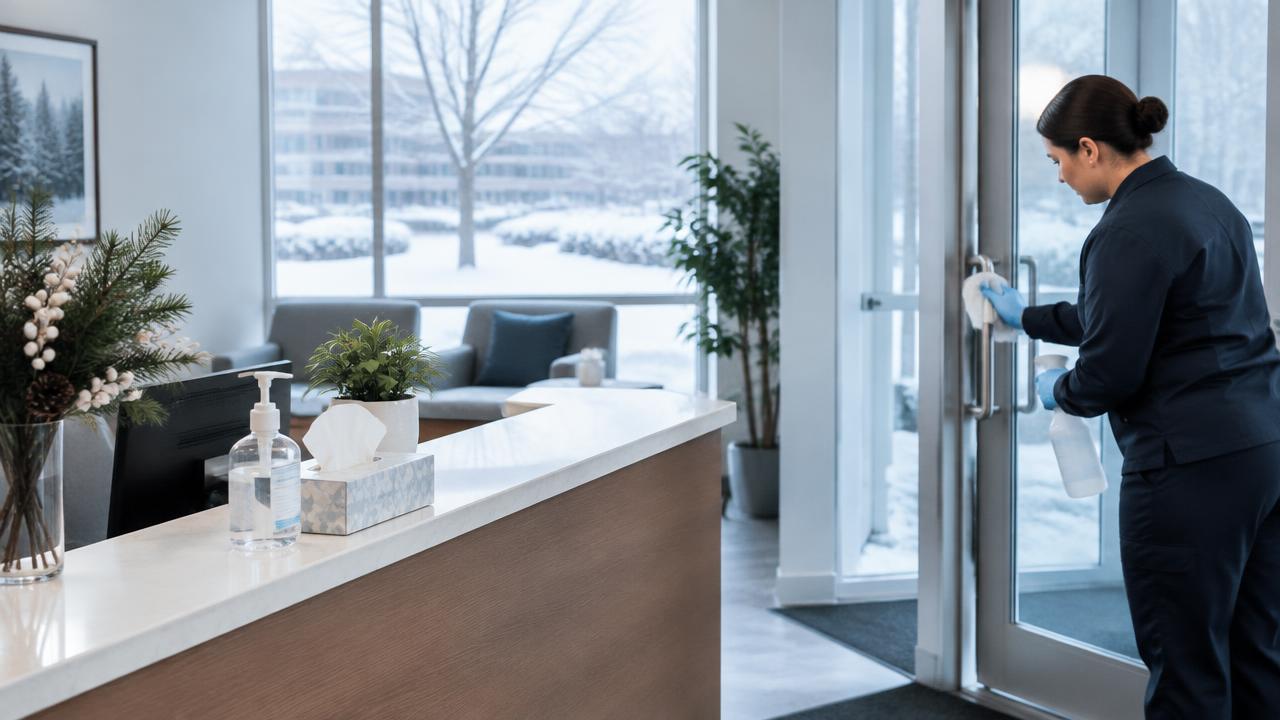
Illness in your building means closed doors, missing staff and questions you need to answer fast.
Don't figure it out mid-crisis. A contracted crew with a written disinfection protocol gets you documented and reopened while competitors are still searching for help.
What surface cleaning does and does not do
Be clear-eyed about this. Influenza, RSV, and SARS-CoV-2 spread primarily through respiratory droplets and aerosols — person to person, through the air. Surface transmission is a secondary route, more significant for RSV and influenza than for COVID, and meaningful for norovirus which is not a respiratory virus at all.
So surface disinfection is one control among several, not the whole answer. Ventilation, filtration, staying home when sick, and hand hygiene do more. What cleaning contributes is real but bounded, and any contractor selling you disinfection as outbreak prevention on its own is overstating it.
The seasonal step-up, October through March
Rather than changing everything, increase frequency on a defined short list: entry and interior door handles and push plates, elevator buttons, stair rails, shared kitchen appliance handles and controls, coffee machines and water dispensers, restroom fixtures and dispenser levers, shared desks and hot-desking surfaces, conference room tables and remotes, phones and shared keyboards, and reception counters and card readers.
In an occupied building the highest-value change is a mid-day touchpoint round rather than more work at night. A twenty-minute pass over that list at 11am and again at 3pm does more than doubling the nightly scope, because it interrupts the day's accumulation instead of cleaning after everyone has gone home.
Products and the contact time trap
Influenza, RSV, and SARS-CoV-2 are all enveloped viruses and are readily inactivated by most EPA-registered disinfectants, including standard quaternary ammonium products and 70 percent alcohol. You do not need an exotic product; you need the correct contact time.
The trap is that almost every field application fails on dwell time. A quat product with a three-minute contact time sprayed and immediately wiped has not made its label claim. In practice this means either using a product with a genuinely short contact time or working in an order that lets the surface stay wet while you move on.
After a confirmed case
Current CDC guidance for most non-healthcare settings is that routine cleaning plus disinfection of the areas the person used is sufficient — a facility-wide deep clean after a single case is not evidence-based, and no reputable contractor should sell you one.
The practical sequence: increase ventilation in the space, wait where possible before entering the area, clean then disinfect the person's immediate work area and the shared surfaces they touched, launder any soft items, and resume normal operation. Anyone doing that work should wear gloves and a mask.
Where higher standards genuinely apply
Medical and dental practices, childcare, schools, and facilities serving older or immunocompromised populations sit in a different risk category and warrant a genuinely elevated protocol: daily clinical-grade disinfection, mid-day rounds, waiting room and shared seating attention, and documented product and contact time. In those environments, the seasonal step-up should be written into the contract rather than requested reactively.
Watch
See the work on video
Office Disinfection here in Tampa Florida.
An office disinfection job in Tampa. The crew treats workstations, shared equipment, door handles and the other high-touch points where cold, flu and stomach viruses spread between employees. Offices book disinfection like this after an illness in the workplace, on a routine during Florida's winter respiratory season, or as part of a recurring cleaning plan.
Another successful Office disinfection in Tampa - St. Pete 813-738-4220
Another office disinfection job in Tampa and St. Petersburg. The crew works through workstations, shared equipment, door handles and the other high-touch points where cold, flu and stomach viruses pass between employees. Offices schedule disinfection like this after an illness in the workplace or on a routine during Florida's winter respiratory season — one call covers locations in both Hillsborough and Pinellas counties.
360° Electrostatic Disinfection — Serving Florida Daily
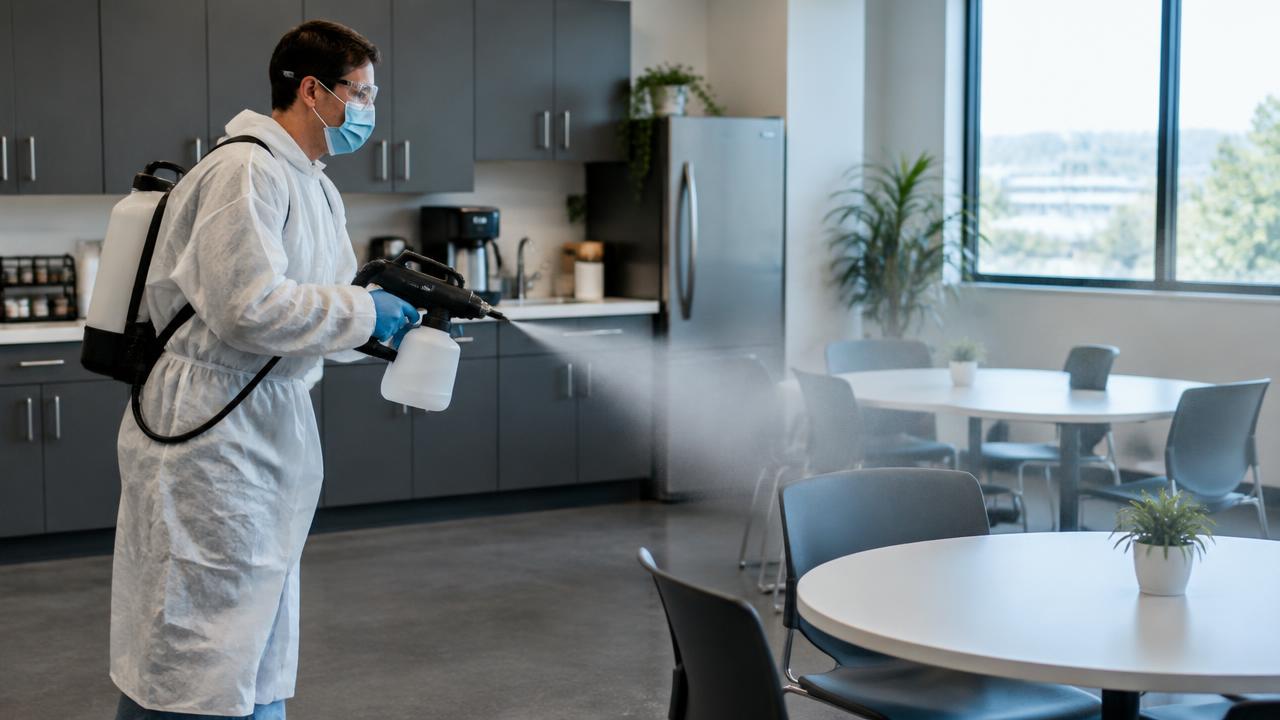
A quick look at electrostatic disinfection. The sprayer puts a charge on the disinfectant mist so it wraps around desks, chairs, railings and equipment, reaching the sides and undersides a wipe-down can miss. It's how large rooms get treated quickly after an illness or a norovirus, flu or COVID case at a Florida facility.
Office Disinfection in Tampa Florida
A real office disinfection job in Tampa. The crew works through desks, door handles, light switches, shared equipment and common areas — the high-touch points where cold, flu and stomach viruses spread between employees. Disinfection like this is scheduled after an illness at work or as a routine during Florida's winter respiratory season.
What clients say
“Keeping kids healthy is our top priority. The nightly cleanings from commercialcleaning.today include electrostatic spraying for Covid disinfection on all our toys, cubbies, and high-touch surfaces. Parents in Lutz love knowing we use the absolute best daycare cleaning service around.”
Sources
Guidance on this page follows published public-health and regulatory sources. Verify current guidance before acting on anything time-sensitive.
Scope checklist
Compare this line by line against any other bid you receive.
Seasonal high-touch list
- Entry and interior door handles and push plates
- Elevator buttons and stair rails
- Kitchen appliance handles, coffee machines, water dispensers
- Restroom fixtures and dispenser levers
- Shared and hot-desk surfaces
- Conference tables, remotes, and phones
- Reception counters and card readers
After a confirmed case
- Increase ventilation in the affected area
- Delay entry where practical
- Clean, then disinfect the person's work area and shared surfaces used
- Launder any soft items involved
- Gloves and mask for the person doing the work
Limited to Florida commercial facilities
Free outbreak-readiness walkthrough
We walk your building, map the high-touch surfaces, and hand you a written response plan: who gets called, what closes, what gets documented. No charge, no obligation.
Questions
Common questions
- Do we need a deep clean after one COVID case?
- For most non-healthcare workplaces, no. Current CDC guidance points to routine cleaning plus disinfection of the areas the person used. A whole-building deep clean after a single case is a sales pitch, not a public health measure.
- What product kills flu, RSV, and COVID?
- Most EPA-registered disinfectants, including standard quats and 70 percent alcohol, are effective against these enveloped viruses. The controlling factor is observing the label contact time, not finding a stronger product.
- Is electrostatic spraying or fogging worth it?
- As a supplement to manual cleaning of high-touch surfaces, it can help cover large areas. As a replacement for wiping, no — soiled surfaces need physical removal first, and fogging does not do that.
- What is the single best cleaning change for flu season?
- A mid-day high-touch round in occupied hours. It interrupts accumulation during the day rather than cleaning it up after everyone has already been exposed.
- Should we increase cleaning or improve ventilation?
- Ventilation and filtration have a bigger effect on respiratory transmission than surface cleaning. Do both, but if you can only fund one, ask your HVAC contractor about filtration and fresh air first. We would rather tell you that than sell you the wrong thing.
Need this done rather than read?
We handle outbreak response, recall cleaning, and inspection recovery across Florida. Call or text (813) 738-4220.