“We rely on commercialcleaning.today for our critical food borne illness disinfection services. Operating out of Plant City, our facility requires stringent FDA compliance, and their industrial cleaning crew never misses a detail. From deep sanitizing our processing lines to overall warehouse maintenance, they are unmatched in Hillsborough County.”
Facility health guide
Listeria, Salmonella & E. coli: Commercial Kitchen Protocol
Listeria survives and grows at refrigeration temperature in wet niches like drains and gaskets. Salmonella persists on dry surfaces and equipment and spreads by cross-contamination from raw poultry, eggs, and produce. E. coli O157:H7 spreads from raw beef and contaminated produce with an extremely low infectious dose. Each requires a different focus, though all three respond to correct clean-then-sanitise practice.
Listeria: the cold, wet, persistent one
Listeria monocytogenes is the one that breaks the usual assumptions. It grows at refrigeration temperature, tolerates salt, and establishes persistent colonies in wet cold environments. A kitchen can carry the same Listeria strain for years in a floor drain or a walk-in door gasket, seeding product intermittently.
Control is environmental, not just food-contact. Target floor drains, the floor-to-wall junction in cold storage, door gaskets and seals, condensate pans and drip lines, equipment feet and casters, cracked or damaged floor tile, and standing water anywhere in a cold area. Eliminating standing water matters as much as any chemical.
Salmonella: raw ingredients and cross-contamination
Salmonella arrives in your kitchen on raw poultry, eggs, meat, and increasingly on produce, and it moves by cross-contamination — a board, a knife, a hand, a cloth, a scale, or a sink. It survives on dry surfaces for extended periods, so a surface that looks and feels clean can still carry it.
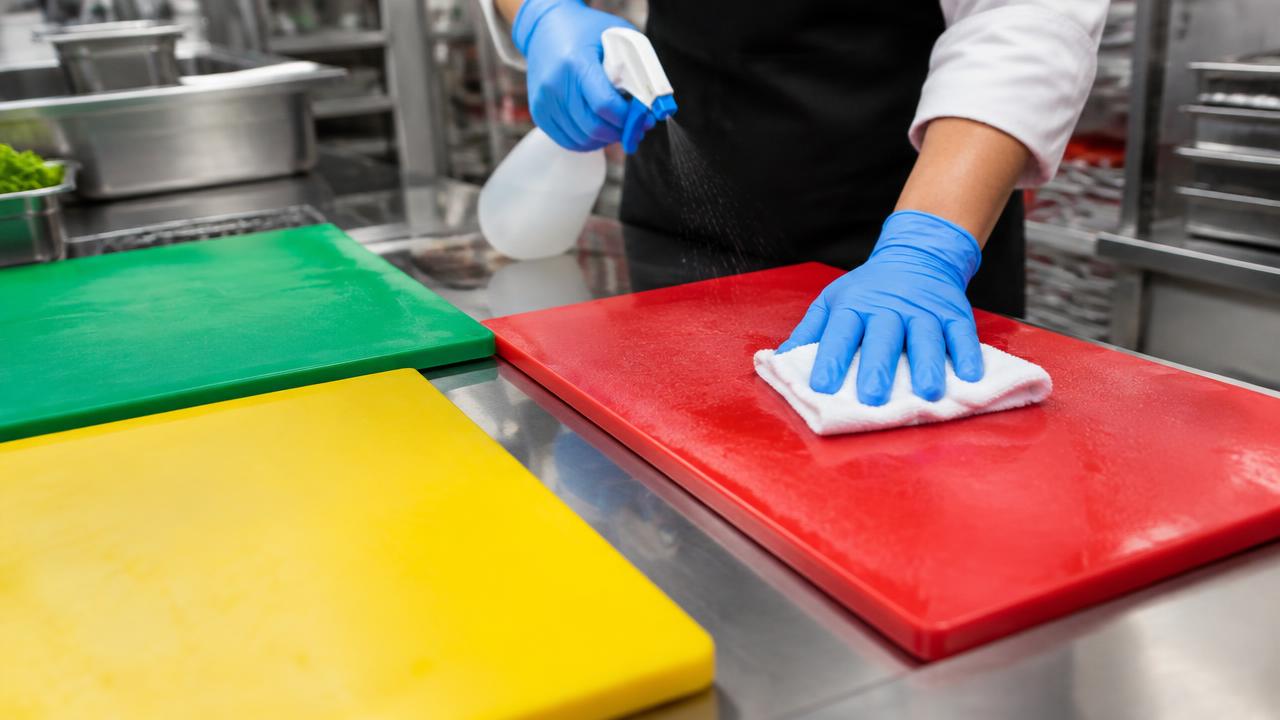
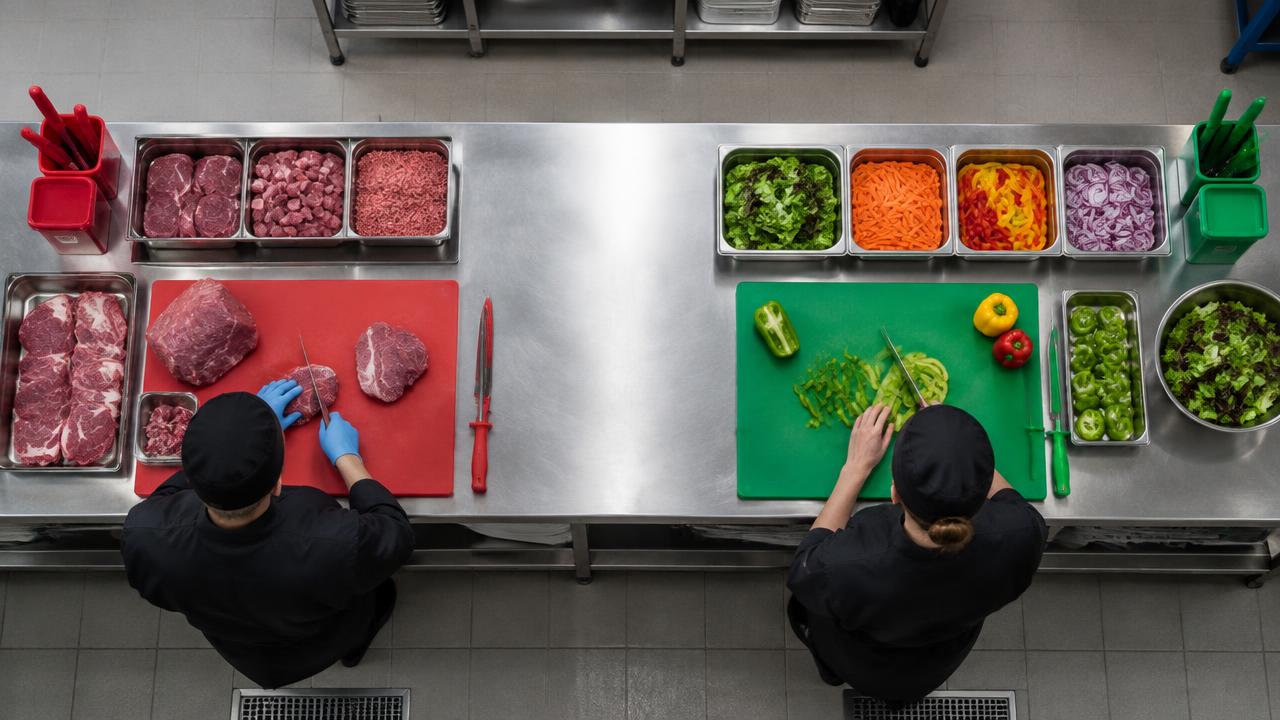
Control is separation and sequence. Dedicated boards and utensils by product type, prep sequencing that puts ready-to-eat before raw, thorough clean-and-sanitise between tasks rather than at end of shift, and cloth discipline — a cloth used on a raw chicken board and then on a prep table has done more damage than a whole shift of poor cleaning.
E. coli O157:H7: tiny dose, serious outcome
Shiga toxin-producing E. coli needs as few as ten organisms to cause illness, and the illness can be severe. It arrives on raw ground beef and on contaminated leafy greens and produce, and produce is now the more common route in outbreaks.
The kitchen controls are the produce wash sink and the cold prep station. Produce prep areas should be separated from raw meat handling in space or in time, sinks cleaned and sanitised between uses, and the cold prep table treated as a ready-to-eat surface with a stricter cleaning cadence than a cook line.
What all three have in common
Clean before you sanitise, every time. Verify sanitiser concentration with test strips rather than eye. Give the sanitiser its contact time. Manage cloths — colour-coded, changed frequently, held in sanitiser solution at correct strength, never carried between zones. Keep hand sinks stocked, unobstructed, and used.
And keep equipment in a condition that can be cleaned. Cracked cutting boards, torn gaskets, pitted stainless, and damaged floor tile are uncleanable by definition, and no protocol overcomes a surface that cannot be reached or resurfaced.
What clients say
“We need a spotless tasting room and highly sanitary conditions around our production equipment. commercialcleaning.today handles the tank exterior sanitization and nightly janitorial work beautifully. They understand the specific hygienic needs of the Tampa craft brewing industry.”
Sources
Guidance on this page follows published public-health and regulatory sources. Verify current guidance before acting on anything time-sensitive.
Scope checklist
Compare this line by line against any other bid you receive.
Listeria — environmental focus
- Floor drains cleaned and sanitised on a stated schedule
- Cold storage floor-to-wall junctions
- Door gaskets and seals, removed and cleaned where possible
- Condensate pans and drip lines
- Equipment feet, casters, and undersides
- Eliminate standing water in cold areas
Salmonella — separation focus
- Dedicated boards and utensils by product type
- Prep sequence: ready-to-eat before raw
- Clean and sanitise between tasks, not at end of shift
- Colour-coded cloths held in correct-strength solution
- Scales, thermometers, and shared small equipment between uses
E. coli — produce and cold prep focus
- Produce prep separated from raw meat in space or time
- Wash sinks cleaned and sanitised between uses
- Cold prep tables treated as ready-to-eat surfaces
- Walk-in shelving where produce is stored
Questions
Common questions
- Why does Listeria need a different approach?
- Because it grows at refrigeration temperature and lives in wet environmental niches rather than only on food-contact surfaces. Cleaning prep tables perfectly while ignoring the drain and the walk-in gasket does not control it.
- Does hot water alone sanitise?
- Only at true sanitising temperatures in a properly functioning dish machine or a hot-water sanitising sink at the required temperature and duration. Hot tap water on a prep table does not sanitise.
- How often should sanitiser buckets be changed?
- Whenever concentration drops below the required level, whenever the solution is visibly soiled, and at minimum every few hours. Test strips decide it, not the clock alone.
- Are colour-coded boards enough to stop cross-contamination?
- They help but they are not sufficient on their own. Cloths, hands, sinks, scales, and thermometers move pathogens just as effectively as a shared board.
- Can a deep clean eliminate a persistent Listeria strain?
- A thorough environmental deep clean addressing drains, gaskets, junctions, and equipment undersides can, but persistent strains sometimes require equipment repair or replacement of uncleanable surfaces. We will tell you when cleaning has hit its limit.
Need this done rather than read?
We handle outbreak response, recall cleaning, and inspection recovery across Florida. Call or text (813) 738-4220.