“Finding a cleaning company that actually cleans grease trap surrounds and performs thorough kitchen hood sanitization is rare. commercialcleaning.today handles our restaurant cleaning overnight, ensuring we open to a spotless kitchen and dining room every single morning in Ybor City.”
Facility health guide
Failed a Health Inspection? The Re-Inspection Cleaning Checklist
Most cleaning-related inspection violations fall into five groups: soiled non-food-contact surfaces, grease accumulation on equipment and walls, floor and drain condition, dumpster and waste areas, and obstructed or unstocked hand sinks. Work the inspection report item by item, fix the underlying cause rather than the visible symptom, and put a written recurring routine in place before the re-inspection.
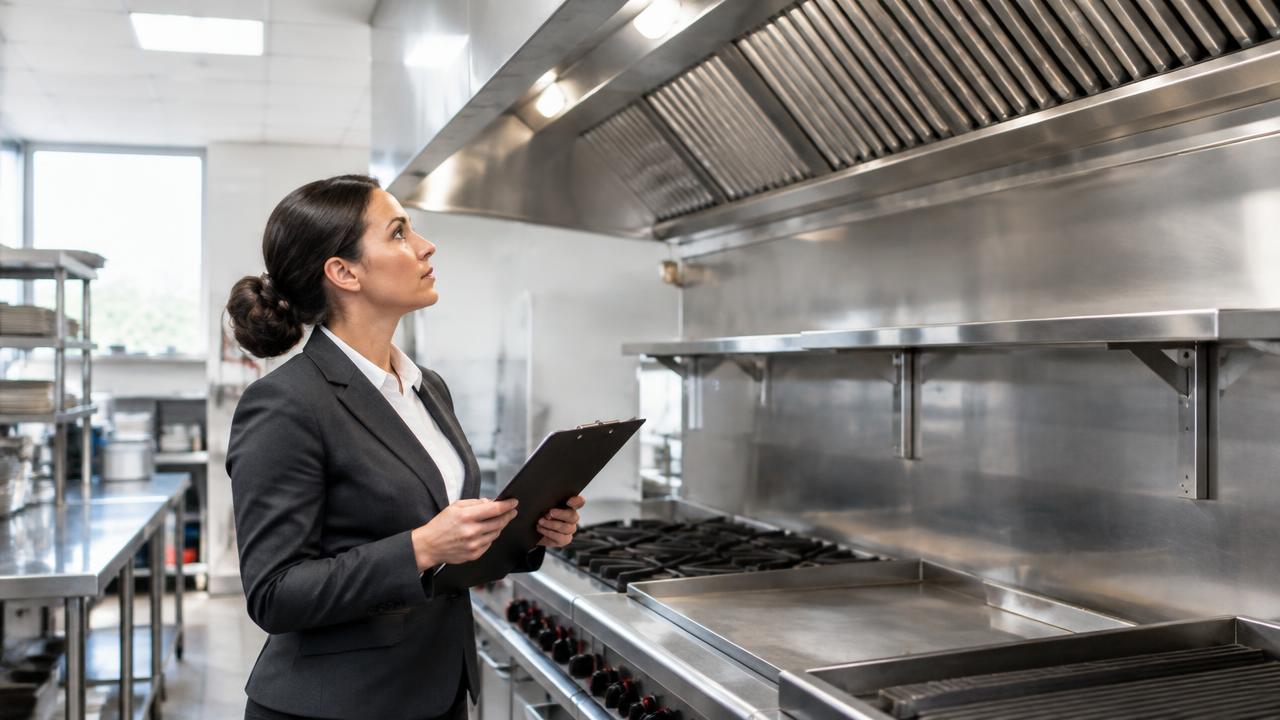
Read the report as a system, not a list
Inspection reports look like a list of unrelated faults. They usually are not. Grease on the wall behind the fryer, a slippery floor, a soiled hood surround, and a drain issue are one problem — degreasing frequency — appearing in four places. Fixing them individually means they all come back together.
Group the cited items by cause before you start. It is faster, it is cheaper, and it means the re-inspection finds a different kitchen rather than a freshly wiped version of the same one.
The five that recur
Soiled non-food-contact surfaces: equipment exteriors, shelving undersides, table legs, hood surrounds, wall surfaces above the splash line, and the sides and backs of equipment. These are cited constantly because closing crews clean what they can see from standing height.
Grease accumulation: on and behind the cook line, on equipment legs and casters, on wall and ceiling surfaces near fryers, and in floor grout. Degreaser at correct dilution with agitation, not a mop.
Floor and drain condition: standing water, soiled grout, damaged tile, and drains with buildup. A drain that smells is a drain that is breeding flies.
Waste and dumpster areas: soiled containers, lids left open, spillage on the pad, and pest activity. This is an easy fix and an easy citation.
Hand sinks: blocked by equipment or dishes, missing soap or towels, or used for anything other than handwashing. Zero cost to fix, cited relentlessly.
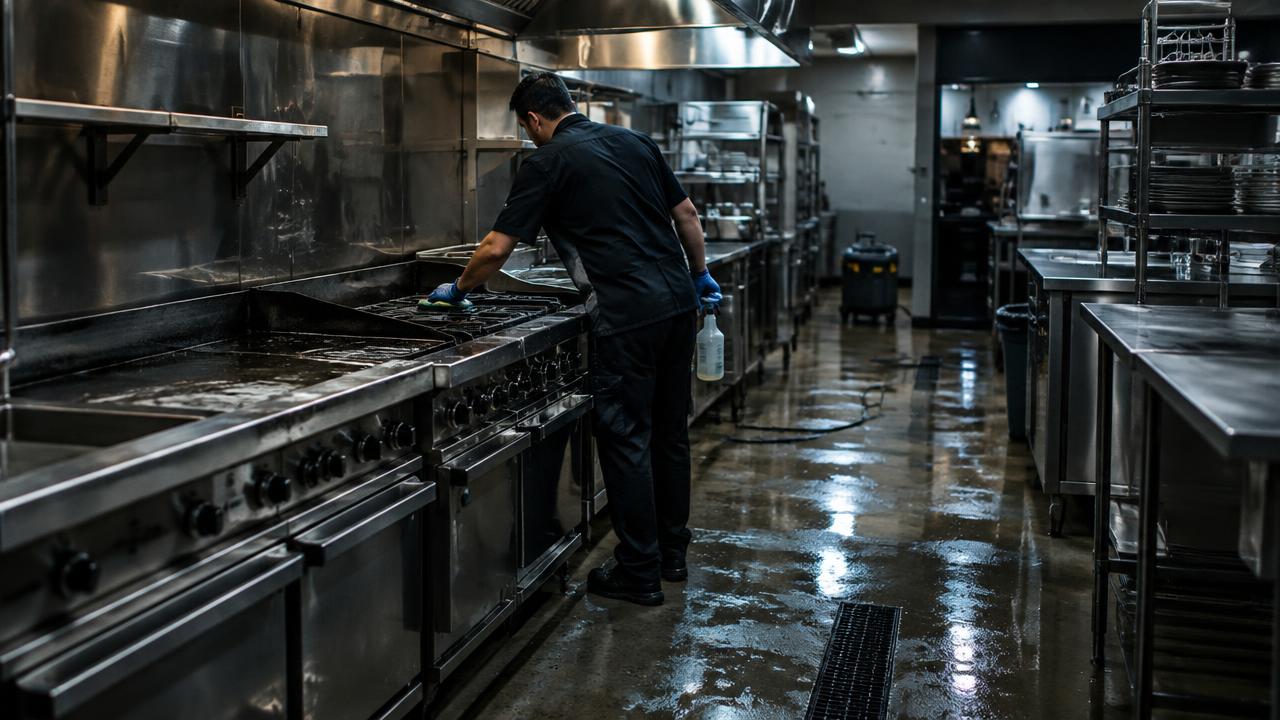
Fix the cause, then prove it
For each grouped cause, decide what changes permanently: a degreasing frequency written into the closing routine, a drain treatment schedule, a monthly detail of equipment undersides and wall surfaces, a dumpster area wash-down on a stated day, and a hand-sink rule that a manager enforces.
Then document it. Post the routine, sign it off daily, and keep the record. An inspector returning to a kitchen with a visible, signed cleaning routine reads it as a different operation than a kitchen that just got scrubbed on Tuesday.
Where a contractor helps and where it does not
A contractor can clear the backlog fast — the degreasing, the grout, the equipment undersides, the drains, and the areas your team genuinely cannot reach after a full service. That is real value before a re-inspection, and it is the work we prioritise when a client sends us a report.
What a contractor cannot fix is food handling, temperature control, employee hygiene practice, equipment in disrepair, or pest harbourage created by structural gaps. Those are yours, and any cleaning company implying otherwise is not helping you pass.
Watch
See the work on video
Hantavirus in Commercial Facilities: The 2026 Response Protocol Every Operator Needs
What to do when rodent droppings turn up at a commercial facility. Hantavirus spreads when dried urine and droppings are disturbed, so the protocol is: ventilate first, never dry-sweep or vacuum, wet everything down with disinfectant before touching it, double-bag the waste, and disinfect the area afterward. It applies to warehouses, kitchens, storage rooms and anywhere mice can get in — and it matters most in Florida's cooler months when rodents move indoors.
What clients say
Sources
Guidance on this page follows published public-health and regulatory sources. Verify current guidance before acting on anything time-sensitive.
Scope checklist
Compare this line by line against any other bid you receive.
Before re-inspection
- Degrease cook line, equipment exteriors, legs, casters, and wall surfaces
- Clean behind and beneath all movable equipment
- Deep clean floor grout with agitation and extraction
- Clear and treat all floor drains
- Detail shelving including undersides and supports
- Clean hood exterior and surrounds; confirm duct cleaning is current
- Wash dumpster area and pad; confirm lids close
- Clear and stock every hand sink
- Clean walk-in gaskets, shelving, and floor junctions
Make it stick
- Written closing routine with a degreasing frequency
- Drain treatment schedule
- Monthly detail schedule for undersides and wall surfaces
- Dumpster wash-down on a stated day
- Daily sign-off record kept on site
Questions
Common questions
- How quickly can you turn a kitchen around before re-inspection?
- Usually within a few days, and faster in Hillsborough County. Send us the inspection report and we scope directly against the cited items rather than quoting a generic deep clean.
- Are Florida restaurant inspections public?
- Yes. Inspection results are published and searchable, which is one reason recurring violations do commercial damage beyond the citation itself.
- Will a deep clean guarantee we pass?
- No, and be sceptical of anyone who says it will. Cleaning addresses cleaning violations. Food handling, temperatures, employee practice, and equipment condition are separate and remain yours.
- What is the most commonly cited cleaning item?
- Soiled non-food-contact surfaces — equipment exteriors, shelving undersides, and wall surfaces near the cook line. They are cited because standard closing routines never reach them.
- Does hood cleaning count?
- Hood and duct cleaning must be performed by a licensed certified contractor on a documented schedule. We clean accessible exterior and surrounds and will tell you when the duct work is due, but we do not perform it.
Need this done rather than read?
We handle outbreak response, recall cleaning, and inspection recovery across Florida. Call or text (813) 738-4220.