Biohazard & outbreak response
Plague Disinfection and Facility Preparedness for Commercial Buildings
When a suspected infectious-disease case hits a building, the doors close, the phones light up, and someone has to decide what happens next — fast. Facilities without a plan lose days to scrambling for a contractor. Facilities with one call a single number and get back to business. We build that plan, and we execute it.
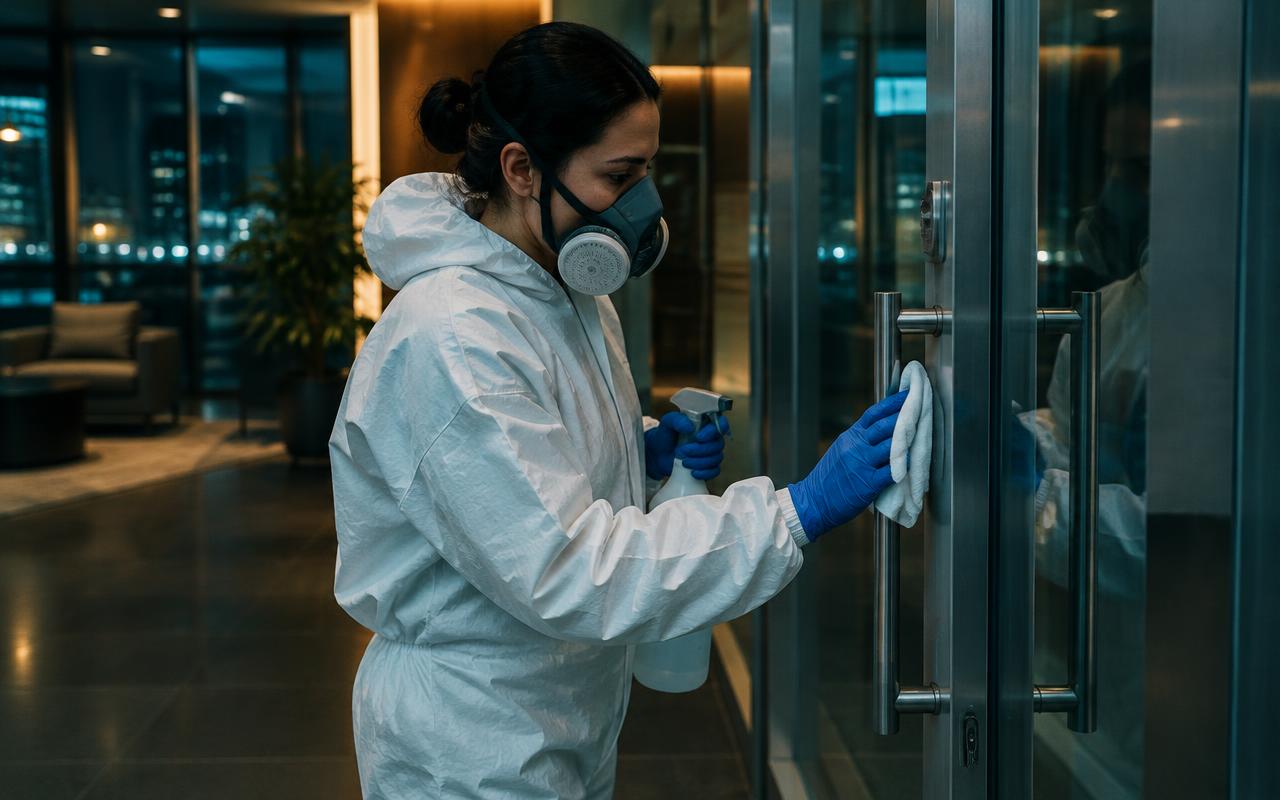
One positive case can close your building. Do you have a plan — or a phone number you'll be searching for at 2 a.m.?
Closures, lost revenue, worried staff, calls from your landlord and insurer — the cost of an infectious-disease incident lands on the business, not the disease. Get the response written down and a crew lined up now, while it's cheap and calm.
The real risk is to your business
What an unprepared incident costs you
Closed doors
Affected areas stay shut until they're properly disinfected and documented. Every day closed is revenue you don't get back.
Staff out and on edge
Employees won't come back to a building they don't trust. Absences and turnover follow a poorly handled incident.
Liability exposure
Employers carry the duty to protect workers. Sending untrained staff in with household products puts the risk — and the claims — on you.
No paper trail
Insurers, landlords and regulators ask what was cleaned, with what, and when. No documentation means no defense.
Reviews and the local news
A building known for an illness event loses customers long after it's clean. How fast you respond is what people remember.
Why waiting is the expensive option
- Emergency call-outs cost more than planned work — and you're negotiating under pressure.
- During an outbreak, qualified disinfection crews book up. Contract clients get scheduled first.
- A contractor who already knows your building starts disinfecting on day one instead of spending it on a walkthrough.
Limited to Florida commercial facilities
Free outbreak-readiness walkthrough
We walk your building, map the high-touch surfaces, and hand you a written response plan: who gets called, what closes, what gets documented. No charge, no obligation.
What plague is — and what it isn't
Plague is a bacterial disease caused by Yersinia pestis. It is not a virus, it does not spread the way COVID-19 does, and it is treatable with common antibiotics when caught early. It exists naturally in rodent and flea populations in parts of the American Southwest, where a handful of human cases are reported each year.
There are three forms. Bubonic plague, the most common, infects the lymph nodes and is not spread person to person under normal circumstances. Septicemic plague infects the blood. Pneumonic plague — the rarest and most serious — infects the lungs and is the only form that spreads readily between people, through respiratory droplets in close contact.
The word "plague" carries centuries of baggage, which is why a single overseas headline can put facility managers on the phone with their cleaning contractor. The responsible answer is neither dismissal nor alarm: the risk today is very low, and the correct response to that fact is a written plan, not panic.
How risky is plague to a commercial building?
For an ordinary Florida office, retail store, medical suite, or warehouse, the risk from the current situation is very low. There is no U.S. outbreak, and plague does not linger in the environment the way a norovirus does — the bacteria are fragile outside a host and are readily killed by standard EPA-registered disinfectants.
The situations that would genuinely change a facility's risk picture are narrow: a suspected or confirmed case among staff (most relevant for laboratories, healthcare, and veterinary settings), a rodent or flea problem inside or around the building itself, or an official public-health directive affecting your facility.
If any of those apply, the first call is to public health, not to a cleaning company. Disinfection is one component of a response that health authorities direct. What a facility can and should do in advance is make sure the cleaning response — assessment, product, documentation, and crew protection — is already written down.
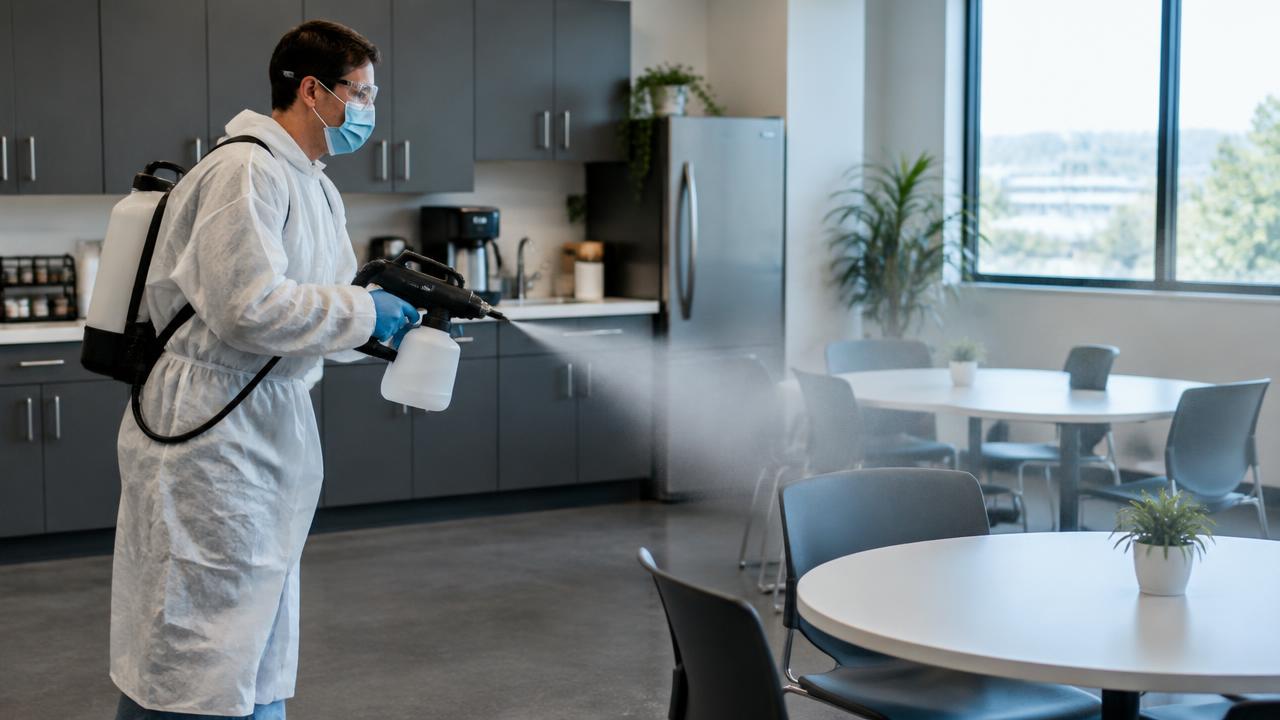
Our 9-step outbreak disinfection protocol
A credible response follows a documented sequence. Improvised deep cleaning wastes product, misses surfaces that matter, and — worse — can expose your own staff. When we execute an outbreak or biohazard response, the sequence is:
First, coordinate with public health authorities, who direct the overall response and confirm whether disinfection is required. Second, assess and control the area — close off affected zones and restrict access. Third, protect the crew: our crews work under documented safety procedures with droplet precautions and proper PPE per the site risk assessment and OSHA requirements.
Fourth, pre-clean visible soil, because organic matter disables disinfectants. Fifth, apply an EPA-registered product, strictly per its label — contact times are not suggestions. Sixth, address soft surfaces and HVAC filters per the response plan. Seventh, where rodents are part of the picture, flea control is coordinated with licensed pest professionals before any rodent control, or the problem gets worse, not better. Eighth, regulated waste is bagged, labeled, and disposed of properly. Ninth, everything is documented — areas, products, contact times, crew, and timestamps — so you have a record for your insurer, your landlord, and your regulator.
Why facilities set this up before an incident
Every serious outbreak response we have executed was for a client who already had a routine contract. That is not a sales line — it is how response actually works. The contractor already knows the building, the traffic patterns, the soft surfaces, the HVAC layout, and the decision-makers. A first call during an emergency spends its first day on a walkthrough instead of a response.
A written response plan costs nothing to hold and changes the first hour of a bad week: who is called, which areas close, how the crew is notified, what gets documented. Facilities with a plan reopen faster, spend less, and keep staff calmer — because the plan was made by people who were not under pressure.
We serve as the go-to disinfection contractor for facilities across Tampa and Florida that want this settled before a headline makes it urgent. For contract clients in Hillsborough County, response is typically same day or next morning; elsewhere in Florida we mobilize a dedicated crew for the building.
Sources
Guidance on this page follows published public-health and regulatory sources. Verify current guidance before acting on anything time-sensitive.
- CDC — About Plague
- CDC — How Plague Spreads
- WHO — Plague fact sheet
- OSHA — Emergency Preparedness and Response
- Texas DSHS — Plague (zoonotic disease control)
- RFE/RL — Siberian Anti-Plague Institute staff isolated after worker's death
- CBC News — Did a Russian lab worker die from pneumonic plague?
- BMJ — Russia plague outbreak after reported death of lab worker
- PBS NewsHour — What to know about a Russian lab worker's death
- Al Jazeera — Russian lab worker dies of suspected plague in Siberia
- El Dorado County — Resident tests positive for plague (2025)
- NBC News — California resident catches the plague at Lake Tahoe (2025)
Scope checklist
Compare this line by line against any other bid you receive.
Professional response sequence
- Coordinate with public health before any disinfection begins
- Assess and control the area — close and restrict affected zones
- Crew protection: documented procedures, droplet precautions, PPE per OSHA and the site risk assessment
- Pre-clean visible soil before applying any disinfectant
- EPA-registered product applied strictly per label contact times
- Soft surfaces and HVAC filters addressed per the response plan
- Rodent-related situations: flea control by licensed pest professionals before rodent control
- Regulated medical waste bagged, labeled, and disposed of per regulations
- Full documentation: areas, products, contact times, crew, timestamps
Is your facility ready?
- You have a written plan for a suspected illness event — not just a phone number
- High-touch surfaces are inventoried so disinfection can be verified, not guessed
- Your cleaning scope already includes touchpoint disinfection with EPA-registered products
- Someone is designated to make closure and communication decisions
- Documentation exists for what was cleaned, when, and by whom
Questions
Plague Disinfection & Facility Response FAQs
- What happens if we wait until someone gets sick?
- You'll be making closure, staffing and cleaning decisions under pressure, calling contractors who don't know your building, and competing for crews with everyone else dealing with the same illness. Facilities with a plan and a contract in place get scheduled first and reopen faster.
- Is there any plague risk in Florida right now?
- No U.S. outbreak has been reported, and plague does not occur naturally in Florida's rodent populations the way it does in the American Southwest. The realistic risk to a Florida commercial building from the current overseas situation is very low. Preparedness matters precisely because it is cheap when the risk is low and impossible to buy quickly when the risk is not.
- How fast can you respond?
- For contract clients in Hillsborough County, response is typically same day or next morning. For facilities elsewhere in Florida, we mobilize a dedicated crew for your building. Every response begins with coordination with public health, which directs the overall response.
- Can plague survive on surfaces in an office?
- The bacteria that cause plague are fragile outside a host and are killed by standard EPA-registered disinfectants when used per label. Under ordinary circumstances, bubonic plague is not spread person to person; only pneumonic plague spreads through close-contact respiratory droplets. Surface disinfection is part of a proper response, but the greater contamination risk in a building with rodent activity comes from droppings and fleas.
- What should we do if an employee is suspected of having plague?
- Contact public health authorities and your medical provider first — they direct the response. Keep the employee out of the facility, restrict the areas they used, and then execute your written disinfection protocol. If you have a response contract with us, this is the moment it exists for; the sequence, products, and documentation are already defined.
- Do you handle the rodent and flea problem too?
- No — rodent and flea control is specialized pest-control work and is coordinated with licensed pest professionals. Where rodents are part of the picture, flea control must happen before rodent control, or the fleas leave the dying rodents and look for new hosts. We handle the disinfection, waste handling, and documentation around that work.
- What does a preparedness plan cost?
- Often nothing beyond the cleaning contract you already have. A written response plan defines who is called, what closes, and what is documented — it is largely a decision to write it down. For buildings that want a contractor standing behind the plan, we fold response provisions into the routine contract. We quote after a walkthrough rather than publishing invented numbers.
Limited to Florida commercial facilities
Free outbreak-readiness walkthrough
We walk your building, map the high-touch surfaces, and hand you a written response plan: who gets called, what closes, what gets documented. No charge, no obligation.
Keep going
Related pages
Don't find out you needed a plan the hard way
Written disinfection and outbreak response, a crew that already knows your building, and priority scheduling for contract clients. Call or text (813) 738-4220.