“We rely on commercialcleaning.today for our critical food borne illness disinfection services. Operating out of Plant City, our facility requires stringent FDA compliance, and their industrial cleaning crew never misses a detail. From deep sanitizing our processing lines to overall warehouse maintenance, they are unmatched in Hillsborough County.”
Facility health guide
Food Recall Response: Cleaning & Sanitation Steps
After a food recall, segregate and label the recalled product immediately, then clean and sanitise every surface and piece of equipment the product contacted — prep surfaces, cutting boards, slicers and processors, storage shelving, walk-in surfaces, and the utensils used with it. Clean first, sanitise second, and document what you did, because that record is what a health inspector or your corporate office will ask for.
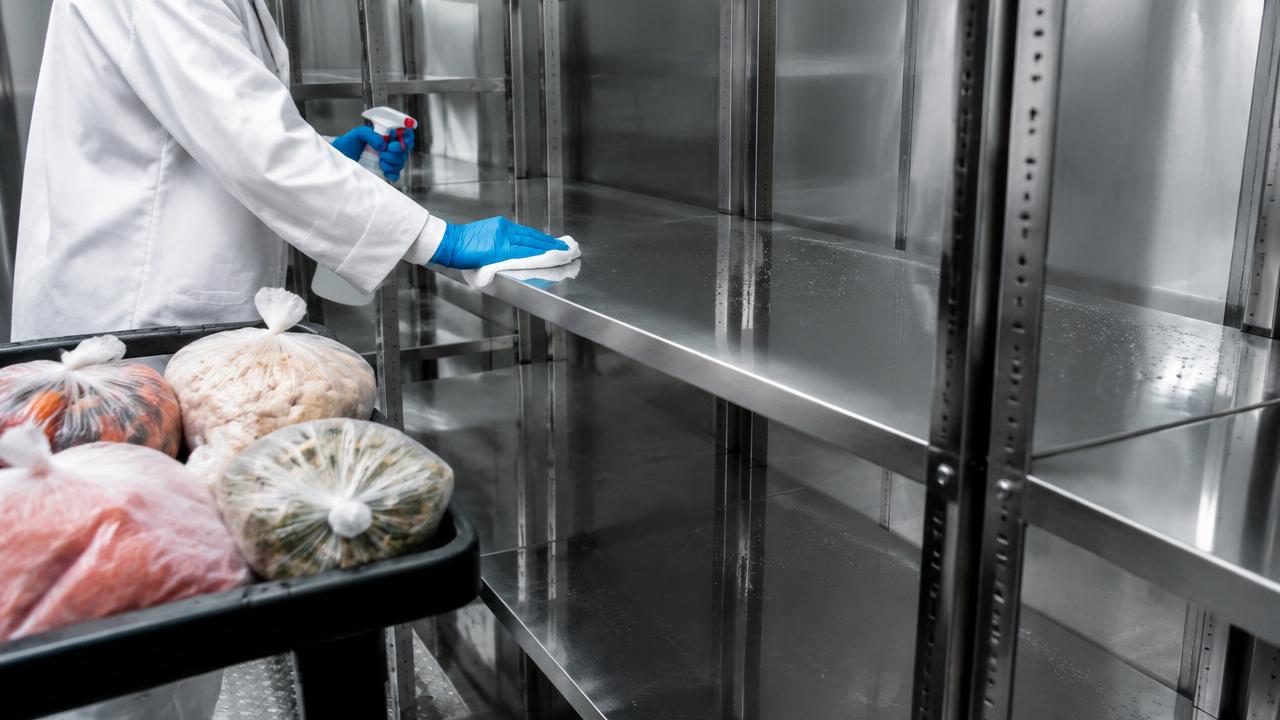
First: stop, segregate, label
Before any cleaning, pull the recalled product from service across every location it could be — line, prep, walk-in, dry storage, freezer, and any prepped item made with it. Move it to a designated area, mark it clearly as DO NOT USE, and record lot numbers and quantities. Do not discard it until you have checked the recall notice, because some recalls require the product to be returned or held.
Then trace forward. If the recalled ingredient went into a batch of prepped food, that batch is now recalled too. This is the step most kitchens skip in the rush, and it is the one that turns a contained recall into an illness incident.
Which surfaces need treatment
Everything the product contacted directly, and everything that contacted those surfaces. That means prep tables, cutting boards, knives and utensils, slicers, mixers, processors and their removable parts, scales, storage containers and their lids, shelving where it sat, walk-in and freezer surfaces including shelf edges and floor beneath, and any transport containers or speed racks.
Do not forget the hidden geometry: slicer blade guards and hubs, mixer attachments at the shaft, container lid gaskets, and the underside of shelving. These are the exact places pathogens survive a superficial wipe-down, and in a Listeria recall they are the ones that matter most.
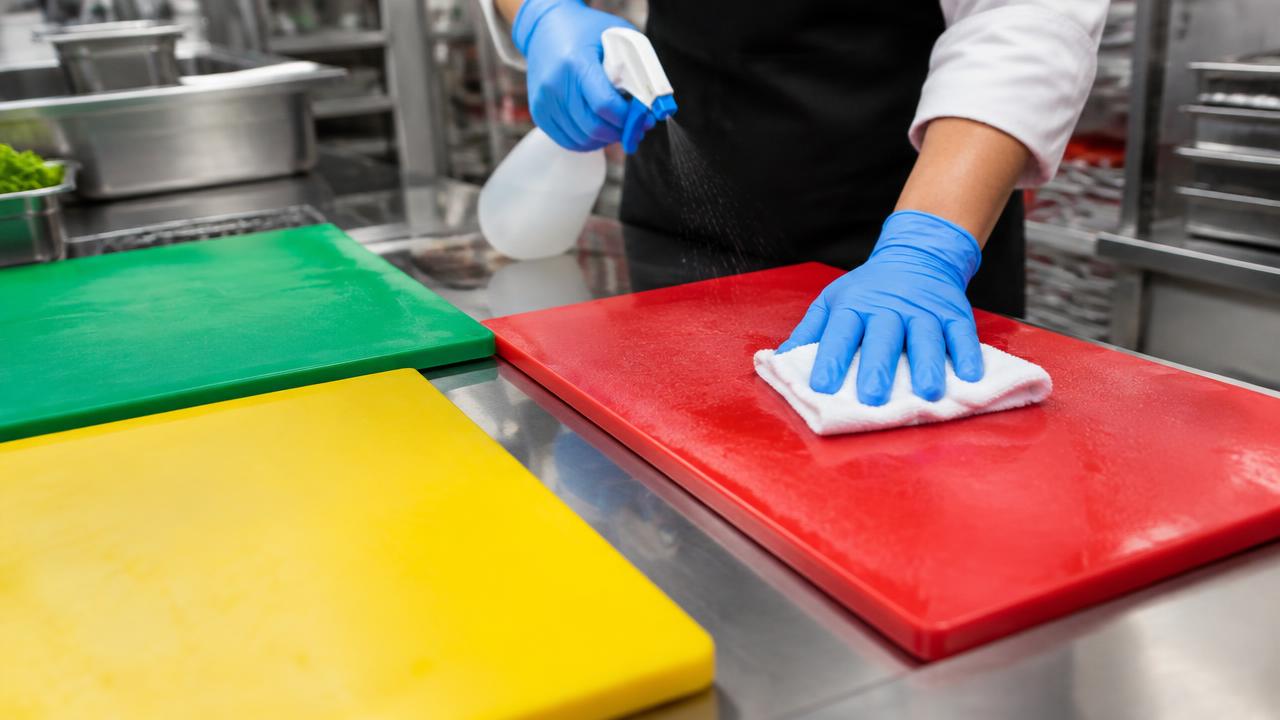
Clean, then sanitise — two separate steps
Wash surfaces with detergent and hot water to remove all food residue and film. Rinse. Only then apply a food-contact sanitiser at the correct concentration and let it stand for the required contact time, then air dry. Sanitiser applied to a soiled surface is consumed by the soil and does very little.
Concentration matters both ways. Too weak fails; too strong leaves residue on food-contact surfaces and is a violation in its own right. Use test strips, not judgement, and record the concentration checked.
Listeria and environmental monitoring
Listeria recalls deserve special mention because Listeria monocytogenes grows at refrigeration temperature and establishes itself in wet, cold niches: floor drains, walk-in floor and wall junctions, condensate pans, door gaskets, and equipment feet. A recall involving Listeria means treating those environmental sites, not just the food-contact surfaces.
That work includes drain cleaning and sanitising, gasket removal and cleaning where possible, condensate line and pan attention, and the floor-wall junction along the entire cold storage area. If you have had a Listeria-related recall, this is worth doing with a contractor rather than a busy closing crew.
Documentation, because you will be asked
Record the recall notice and lot numbers, the products pulled and their quantities, the date and time of segregation, every area and piece of equipment cleaned and sanitised, the products and concentrations used, the person who performed the work, and the disposition of the recalled goods. Photographs help.
This file is what protects you in a health department follow-up, an insurance question, or a franchisor audit. Kitchens that do the work but keep no record end up in the same position as kitchens that did nothing.
What clients say
“Very few companies know how to handle cold storage mold remediation and condensation wipe-downs, but commercialcleaning.today does it perfectly. Their out-of-the-box approach to niche industrial cleaning keeps our Port Tampa Bay logistics facility completely compliant and sanitary.”
Sources
Guidance on this page follows published public-health and regulatory sources. Verify current guidance before acting on anything time-sensitive.
Scope checklist
Compare this line by line against any other bid you receive.
Immediate
- Pull recalled product from every storage and service location
- Segregate, label DO NOT USE, and record lot numbers
- Trace forward to any prepped items made with it
- Check the recall notice for hold-versus-discard instructions
Clean and sanitise
- Prep tables, boards, knives, and utensils
- Slicers, mixers, processors — including guards, hubs, and attachments
- Storage containers, lids, and gaskets
- Shelving, including undersides, and walk-in surfaces
- Detergent wash, rinse, then food-contact sanitiser to contact time
- Verify concentration with test strips
Listeria-specific
- Floor drains cleaned and sanitised
- Walk-in floor-to-wall junctions
- Door gaskets and seals
- Condensate pans and lines
- Equipment feet and undersides
Records
- Recall notice and lot numbers
- Areas and equipment treated
- Products, concentrations, and contact times
- Personnel and timestamps
- Disposition of recalled goods
Questions
Common questions
- Do we have to sanitise equipment if the product was sealed?
- If packaging was intact and never opened, exposure is limited to the storage surfaces it sat on. Clean and sanitise those. If any package was opened or damaged, treat the full contact chain.
- Can we just use our normal sanitiser?
- Yes, if it is an approved food-contact sanitiser used at the correct concentration with test-strip verification and full contact time. The failure is almost always concentration or dwell, not product choice.
- How do we know if a recall affects us?
- FDA and USDA publish recalls continuously, and your suppliers should notify you. Checking the FDA recall list weekly is a reasonable habit for any kitchen, and it takes two minutes.
- What makes a Listeria recall different?
- Listeria grows at refrigeration temperatures and colonises wet cold niches — drains, gaskets, condensate pans, floor-wall junctions. Food-contact cleaning alone does not address it.
- Can you do this cleaning for us?
- Yes. Recall-response deep cleaning for kitchens is scheduled with priority and comes with a written record of every area treated, the products used, and the concentrations verified. Call or text (813) 738-4220.
Keep going
Related pages
Need this done rather than read?
We handle outbreak response, recall cleaning, and inspection recovery across Florida. Call or text (813) 738-4220.